



😕 Getting an "unsupported audio file type" message on Windows 10 or 11? Or need a different audio file for a phone, player, editing program, website, game project, or home theater system? The right fix is usually to convert the audio file, not just rename the extension.
Audio files vary by container, codec, bitrate, sample rate, channels, and compression type. That is why one file may open perfectly in one app but fail in another. 📣 Changing the audio file type properly can help you:
Below, we'll walk through the easiest method first, then explain how to choose a suitable output format and avoid common conversion mistakes.
For most users, the simplest way is to use a desktop audio converter. It reads the original audio data, encodes it into the format you choose, and creates a new playable file. This is different from manually changing .wav to .mp3 in File Explorer, which only changes the name and may make the file unreadable.
WonderFox HD Video Converter Factory Pro 🥇 is a beginner-friendly audio and video processing toolkit for Windows. It can batch convert common audio files, extract audio from videos, and export to everyday formats such as MP3, WAV, FLAC, ALAC, AAC/M4A, OGG, WMA, and more. It also includes practical presets and adjustable audio settings, so you do not have to deal with complicated codec terms from the start.
It is also useful when your source is not a plain music file. For example, you can import a video and save only the sound track, process multiple downloaded local songs at once, or prepare audio for an old device, an editor, a web project, or a home theater workflow.
 Download for Free
Download for Free
Download for Free
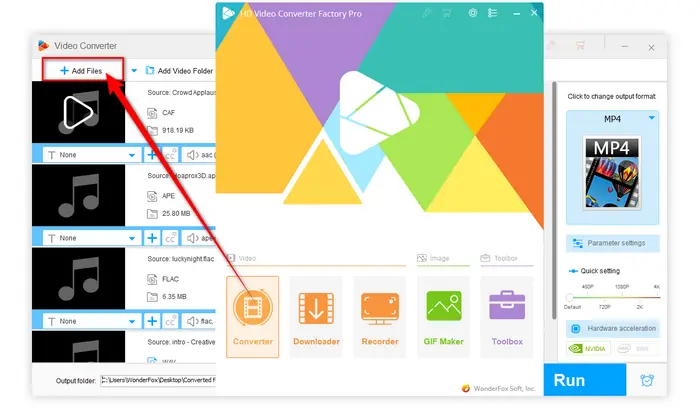
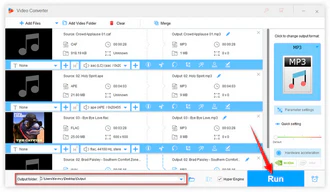
DownloadDownload, install, and run HD Video Converter Factory Pro. Open "Converter" and click "Add Files" to load your audio files. You can also drag and drop several files into the window for batch conversion.
💡 If the audio comes from a video, add the video file directly and choose an audio output format in the next step. If the file is from a music library such as Groove Music or the newer Windows Media Player, make sure it is a local, DRM-free file you own or have permission to convert. Streaming-only or protected subscription files cannot be converted like ordinary audio files.
Click the big "Format" image on the right side to open the output profile list. Go to the "Audio" category and choose the format you need.
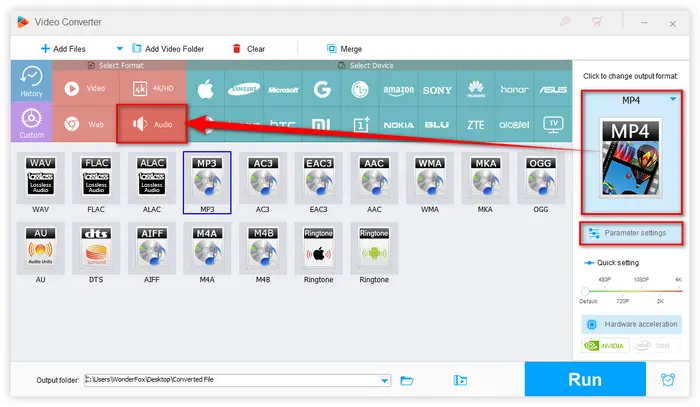
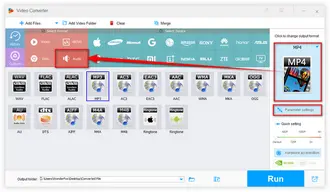
Before conversion, you can open "Parameter settings" to change audio bitrate, alter the sample rate, adjust channels, choose a supported encoder, or change volume. Click OK to save the settings.
💡 Keep the settings practical. Raising the bitrate or sample rate will not restore detail that is already lost. Converting a stereo MP3 to a surround format such as DTS can create a compatible file for some devices, but it cannot magically rebuild real 5.1 surround information unless the source contains those channels. In the same way, converting MP3 to ALAC or FLAC re-encodes the decoded MP3 audio into a lossless format, but it does not restore detail already removed by MP3 compression.
Moreover, this utility can trim, split, splice music files, extract audio from video, and make a ringtone without a hitch.
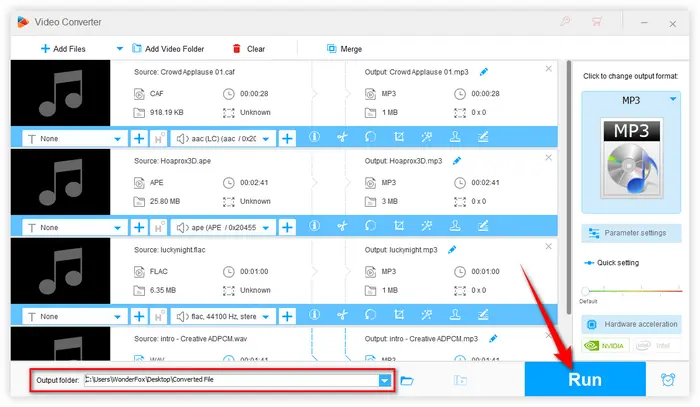
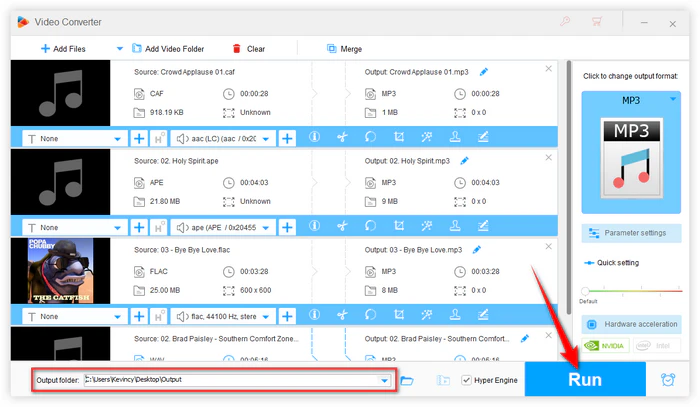
Click the inverted triangle icon at the bottom to choose an output folder. Finally, hit the big "Run" button to start changing audio file type on Windows 10/11. When the conversion is complete, open the output folder and test the new file in your target player or app.
A desktop converter is usually the most convenient choice for batch work and less common formats. But for simple tasks, you can also consider these options:
Choose the method based on your file quantity, privacy needs, output format, and whether you need extra editing or parameter control.
A: It depends on the source and output format. Lossless-to-lossless conversion, such as WAV to FLAC, can preserve quality. Lossless-to-lossy or lossy-to-lossy conversion, such as WAV to MP3 or MP3 to AAC, may lose some detail. To reduce quality loss, avoid repeated conversions and use a suitable bitrate.
A: Yes. WonderFox HD Video Converter Factory Pro can convert video to audio, so you can save music, dialogue, lectures, or sound effects from video files as MP3, WAV, FLAC, AAC, and more.
A: You cannot create quality that does not exist in the source file. Higher bitrate, sample rate, or a lossless output format may help preserve the current quality, but they cannot restore information already removed by lossy compression.
A: The output file may be larger if you choose an uncompressed or lossless format like WAV, FLAC, or ALAC, raise the bitrate, increase channels, or convert a highly compressed file to a less compressed format. Larger size does not always mean better sound.
A: MP3 is still the safest choice for general use because it works on almost every phone, computer, browser, TV, car stereo, and media player. For editing, WAV is often better. For lossless music collections, FLAC is a common cross-platform choice, while ALAC is convenient for Apple Lossless-focused libraries.
A: For MIDI, remember that standard MIDI is not a recorded audio file, so it needs to be rendered by a MIDI-aware tool before becoming MP3. For Groove Music or the newer Windows Media Player library, you can convert local DRM-free audio files. Streaming-only, subscription, or protected music files should not be treated as ordinary convertible files.
That's all about how to change audio file type on Windows 10/11. The key point is simple: do not just change the extension; use an audio converter to create a real new file in the format your device, app, or project needs.
HD Video Converter Factory Pro provides a direct way to convert audio files in bulk, extract audio from video, adjust audio parameters, and handle many common and special output needs. It can also change video format with similar steps, which helps you fix many unsupported video and audio file type issues in one place.
Why not downloaddownload this all-purpose application and give it a try?

Kevincy joined the WonderFox team in 2014 and has been a senior columnist ever since. With over two decades of experience in the video editing industry, he shares tutorials, tips, and how-to guides on video/audio processing and personal DVD backups. Family-oriented and passionate about helping others, he is dedicated to making video and audio processing easier for readers.


Kevincy joined the WonderFox team in 2014 and has been a senior columnist ever since. With over two decades of experience in the video editing industry, he shares tutorials, tips, and how-to guides on video/audio processing and personal DVD backups. Family-oriented and passionate about helping others, he is dedicated to making video and audio processing easier for readers.
 Download for Free
Download for Free
Download for Free

Terms and Conditions | Privacy Policy | License Agreement | Copyright © 2009-2026 WonderFox Soft, Inc. All Rights Reserved