

One of the most common and frustrating issues during video playback is audio being out of sync with the video. So, why does this audio sync problem happen, and how can you fix it? In this article, we'll explore the possible causes and practical solutions.
 Kevincy | Updated on Apr 28, 2026
Few playback problems are more distracting than watching a video where the sound does not match the picture. The voice comes too early, the lips move after the words, or the audio slowly drifts away from the video as playback continues.
This audio and video out-of-sync issue can happen to MP4, MOV, AVI, MKV, iPhone recordings, downloaded videos, converted files, screen recordings, and even ripped DVD videos. The good news is that in many cases, you can fix the problem by converting the video properly, adjusting the frame rate, or changing the audio settings.
In this guide, we’ll explain why audio goes out of sync and show you practical ways to fix it on Windows.
Audio sync problems can be caused by different issues. Here are the most common ones:
Many phones, including iPhones, may record videos with a variable frame rate to save space and improve recording performance. The video may play fine on the phone, but once imported into some video editors or media players, the audio may gradually drift out of sync.
This is especially common with iPhone MOV or MP4 videos used in editing software.
Some videos contain incorrect timing information. This can happen after improper recording, failed downloading, interrupted transfer, bad conversion, or faulty screen recording. When the player cannot read the timing information correctly, the audio and video may not line up.
A video may use an audio codec that your player, TV, editor, or device does not handle well. For example, some TVs or media players may have trouble with certain 5.1/7.1 audio tracks, causing audio delay or lag.
Sometimes the video file itself is fine, but the player, Bluetooth headphones, TV connection, or system performance causes the delay. In this case, the issue may disappear when you switch players, disconnect Bluetooth devices, or play the video on another device.
If a MOV, MP4, or other video was downloaded incompletely, converted with improper settings, or generated by an unreliable tool, the audio may be out of sync from the beginning.
If the audio sync issue is caused by timestamps, frame rate, codec, or format compatibility, a proper video conversion can often rebuild the file and make the audio match the video again.
WonderFox HD Video Converter Factory Pro is a beginner-friendly video converter for Windows that can convert MP4, MOV, AVI, MKV, iPhone videos, and more to widely compatible formats. It also allows you to adjust frame rate, audio encoder, resolution, bitrate, and other parameters, which is useful for fixing audio sync issues caused by VFR, unsupported audio codecs, or problematic video encoding.
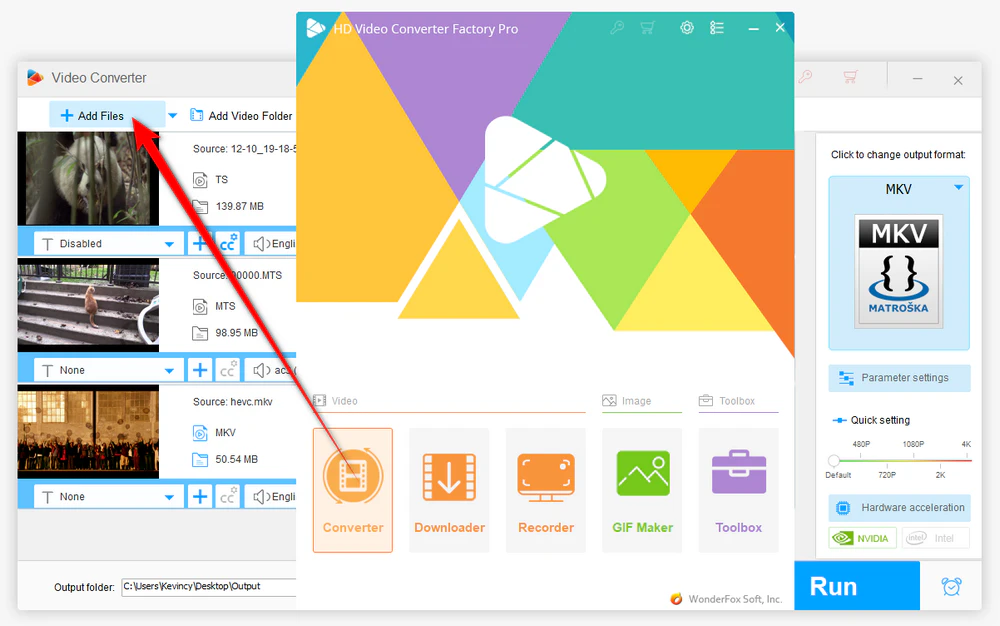
DownloadDownload, install, and launch WonderFox HD Video Converter Factory Pro and open the Converter module.
Click Add Files to import the video whose audio is out of sync. You can also drag and drop the file into the program.
💡 Batch conversion is supported, so you can add multiple problematic videos at once.
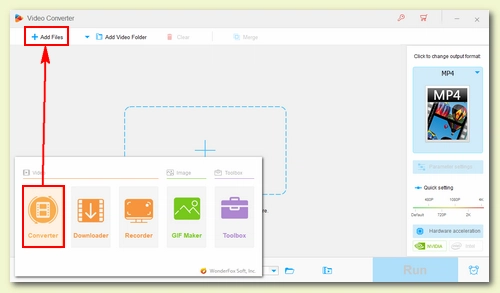
Click the format image on the right side to open the output format library.
For best compatibility, you can choose:
For most users, MP4 with H.264 video and AAC audio is a safe choice.
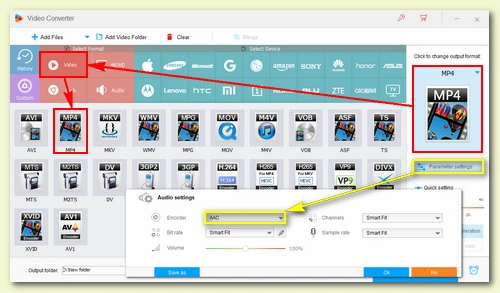
Open Parameter settings.
If your video is from an iPhone, action camera, screen recorder, or MOV file and the audio becomes out of sync during editing, set a constant frame rate such as 30fps or 60fps. This can help avoid sync drift in video editors.
If the issue happens on a TV or media player, you can also change the audio encoder to AAC, especially when the original file contains audio that the device does not handle well.
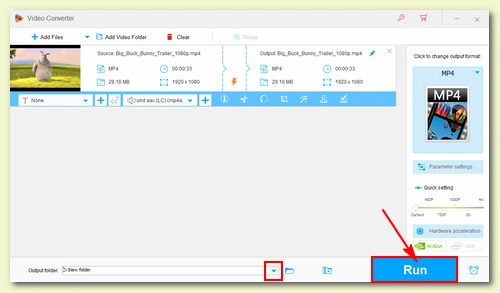
Choose an output folder and click Run to start the conversion.
After conversion, play the new file(s) and check whether the audio and video are now synchronized.
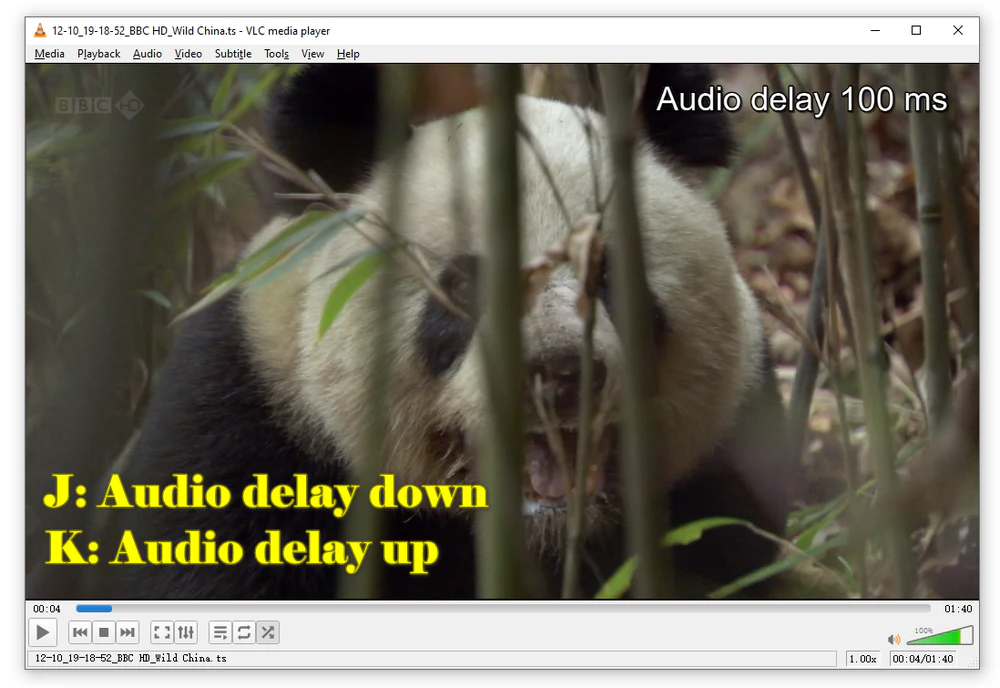
If the video itself is not seriously damaged and you only want to watch it properly for now, VLC Media Player offers a quick way to manually adjust the audio delay during playback.
Open the video in VLC and use the keyboard shortcuts:
In VLC, each key press usually changes the audio delay by 50 milliseconds (ms). In other words, pressing the shortcut once adjusts the sync by 0.05 seconds.
💡 This method is fast, but it only changes playback inside VLC. It does not permanently fix the original video file.
If the video file itself is not damaged, these simple fixes may help:
Some players handle certain formats, codecs, or MOV files better than others. Try VLC or another modern media player to see whether the sync issue still happens.
Bluetooth audio delay can make the video look out of sync even when the file is normal. Test the video with built-in speakers or wired headphones.
If the issue only happens in one app, restart the app, update it, or try another player.
For online videos, slow or unstable internet may cause temporary audio sync problems. Reload the video, switch to a stable Wi-Fi connection, or download the video for offline playback when allowed.
If the video is corrupted, cannot be opened properly, or has missing frames, a normal converter may not be enough. In that case, try a dedicated video repair tool first.
A: Your phone may handle the original recording format better than your computer player or editor. This often happens with iPhone videos, HEVC videos, variable frame rate recordings, or files using uncommon audio settings. Try playing the file in another media player first. If the issue remains, convert the video to a more compatible format.
A: TV audio sync problems can be caused by HDMI delay, Bluetooth speakers, soundbars, unsupported codecs, high-bitrate files, or the TV’s own audio processing settings. Try disabling extra audio effects, changing the TV’s audio output mode, using a different player, or re-encoding the original video.
A: Many editors can struggle with variable frame rate footage. The issue is common with iPhone videos, screen recordings, OBS recordings, Zoom recordings, and some MOV files. A good workaround is to convert the source video to constant frame rate before importing it into the editor.
A: Yes. In a video editor, you can separate the audio from the video, move the audio track slightly forward or backward on the timeline, and preview the result until the dialogue, sound effects, or lip movements match the picture, then export the fixed video.
Audio and video out-of-sync problems can come from many sources, including variable frame rate, incorrect timestamps, unsupported codecs, corrupted MOV files, iPhone recordings, Bluetooth delay, or media player issues.
If the problem only happens during playback, adjusting the audio delay in VLC or switching players may be enough. But if you want to fix the video file itself, converting it with proper frame rate and audio settings is usually a more reliable solution.

WonderFox HD Video Converter Factory Pro
1. Record live streams, gameplay, webinar, video call...
2. Download video/music from 1000+ pop sites.
3. Convert video/music to 500+ optimized presets.
4. Compress large-sized videos with no quality loss.
5. Handy editing features suitable for green hands.
6. Create unique GIF from video or separate images.
7. Ringtone Studio, Subtitle Extractor, and MORE...

Privacy Policy | Copyright © 2009-2026 WonderFox Soft, Inc. All Rights Reserved
