

Plex is a streaming media server that lets you organize, play, and stream movies, TV shows, music, photos, and more from one computer or NAS to TVs, phones, tablets, game consoles, browsers, and other Plex clients. But Plex playback is not decided by the file extension alone. The container, video codec, audio codec, subtitle type, bitrate, resolution, server settings, network condition, and the client device all matter. Want to know what file formats Plex supports and what video format works best for Plex? This guide explains it in plain English.
 Kevincy | Updated on Sep 9, 2026
Plex Media Server can add and manage many common video, audio, and image files. However, “supported by Plex” does not always mean the file will play directly on every Plex app. Plex playback depends on two things: whether the server can recognize the media file and whether the Plex client device can decode the container, video stream, audio stream, subtitles, resolution, bitrate, and other settings.
Plex does not support ISO images, IMG files, VIDEO_TS folders, BDMV folders, or other disc image/folder structures, and its default media scanners may skip them instead of adding them as playable library items. For DVD or Blu-ray sources, convert or remux the actual movie or episodes to regular video files first. A single VOB file may sometimes be scanned as a video, but it is not a reliable Plex streaming format because VOB is normally only one part of a DVD structure.
Plex handles compatible and incompatible files in three ways:
👉 Direct Play: The client device can play the file as-is. This is the best case because the server does almost no work.
👉 Direct Stream: The audio and video streams are supported, but the container is not. Plex repackages the streams into a compatible container on the fly with little CPU usage and no video quality loss.
👉 Transcode: The client cannot play one or more parts of the file, such as the video codec, audio codec, subtitle type, resolution, bitrate, or H.264 level. Plex converts the media during playback, which uses more CPU/GPU power and may cause buffering on a weak server or slow network.
Tips. Direct Play is the most ideal way to stream Plex media. Direct Stream is also fine in most cases. Try to avoid unnecessary full transcoding, especially for 4K files, high-bitrate Blu-ray rips, DTS/TrueHD audio, or image-based subtitles like PGS and VOBSUB, because subtitles and audio can also trigger transcoding.
There is no single “Plex format list” that works the same on every device. For example, Plex for Smart TVs, game consoles, Roku, Apple TV, Android TV, iOS, and web browsers may have different Direct Play limits. Still, the following guide can help you understand the common Plex-compatible choices.
ㆍMP4 container: The safest choice for most Plex clients, especially with H.264 video and AAC audio. Many devices can also handle HEVC (H.265), AC3, or EAC3 in MP4, but support varies.
ㆍMKV container: Frequently used for Blu-ray rips and high-quality movies. Plex can work with MKV on many devices, but unsupported audio tracks, subtitles, codecs, or naming problems can still cause Direct Stream, Transcode, or “not detected” issues.
ㆍAVI container: Older AVI files may contain Xvid/DivX, MPEG-4, MP3, or AC3. They may play on some clients but are not the best choice for smooth cross-device streaming.
ㆍM2TS/TS containers: Common in Blu-ray, AVCHD, and camcorder videos. Some Smart TVs can Direct Play M2TS/TS with compatible H.264, HEVC, or MPEG-2 video, but many files will Direct Stream or Transcode due to audio tracks, subtitles, or high bitrate.
ㆍMOV container: Often works when the streams are H.264 video and AAC audio.
ㆍWMV/ASF containers: Can be supported on some clients, but they are not recommended as a universal Plex delivery format.
Container: MP4
Video codec: H.264/AVC
Audio codec: AAC stereo
Subtitles: External SRT or a compatible text subtitle track when possible
Resolution and bitrate: Match the client device and network speed
For 4K libraries, HEVC/H.265 in MP4 or MKV can save space and play well on supported 4K devices. But older TVs, browsers, phones, and game consoles may need H.264 or a transcode. When you want the least trouble, prepare a 1080p H.264 MP4 version or add a compatible version beside the original high-quality file.
Common audio formats include AAC, AC3, EAC3, MP3, FLAC, ALAC, WAV, and DTS, depending on the client device. If your device cannot decode the audio track, Plex may transcode only the audio while keeping the video stream untouched. For better compatibility, AAC 2.0 is a safe fallback, and AC3 5.1 is commonly used for surround sound.
Plex supported image formats:
JPG, PNG, and other common image formats are usually supported.
Reference: Smart TV supported media formats, Direct Play and Direct Stream, and Disk Image Formats.
With 500+ configured output presets, WonderFox HD Video Converter Factory Pro can help you convert HEVC/H.265, 4K, MKV, M2TS, Xvid, AVI, MOV, WMV, and other digital videos to Plex-friendly formats in simple clicks. Download it now and have a try!
Among all Plex-friendly choices, MP4 is still the most recommended container for users who want fewer playback errors across TVs, mobile devices, browsers, and game consoles. The point is not just “MP4”, though. The video and audio codecs inside the MP4 file are more important.
Container: MP4
Video codec: H.264/AVC
Audio codec: AAC 2.0 for maximum compatibility; optional AC3 5.1 for surround sound
Subtitles: SRT when possible
Resolution: 1920×1080 or lower for the safest cross-device result
Frame rate: Keep the original common frame rate when the client supports it
Bitrate: Keep it within the playback device, local/remote network, and Plex quality limits.
Plex can Direct Play HEVC/H.265 when the playback client can decode it and the rest of the file is also compatible. However, “HEVC supported” does not mean every HEVC file will Direct Play. The container, 8-bit/10-bit profile, HDR format, resolution, frame rate, bitrate, audio codec, subtitles, and playback quality settings can all change the result. If one part is incompatible, Plex may transcode the audio, burn subtitles into the video, or fully transcode the video.
Container: MP4 or MKV, depending on the client
Video codec: HEVC/H.265 is usually the practical choice for compatible 4K devices; H.264 can be easier on older clients but uses much more space at comparable quality
Audio codec: AAC, AC3, or EAC3 according to the playback device; lossless or DTS-family audio may require audio transcoding on some clients
Resolution: 3840×2160 or 4096×2160 only when the client and display support it
Network: Your connection needs sustained throughput above the file's actual bitrate, with extra headroom for bitrate peaks
Note: 4K transcoding is demanding. If the server or remote connection cannot handle it, keep a separate 1080p H.264 MP4 version for older devices or remote streaming.
If a 4K or HEVC file buffers, first check the Plex playback information or Dashboard to see whether it is Direct Play, Direct Stream, or Transcode. Direct Play buffering often points to the network, storage, or client decoder, while a full 4K transcode points to an incompatibility or quality-setting limit and puts much more load on the server.
In short, MP4 + H.264 + AAC remains the safest “it just works” choice across mixed devices. HEVC in MP4 or MKV is a better fit for many 4K libraries when your Plex clients can Direct Play it.
Plex playback problems are often caused by a mismatch between the source file and the client device rather than Plex Media Server simply “not supporting” the extension. HEVC, 4K, ISO, MKV, M2TS, VOB, and Xvid each fail for slightly different reasons, so check the actual cause before converting everything blindly.
HEVC is supported by many Plex clients, especially newer 4K-capable devices, but Direct Play still depends on the complete media profile. A 10-bit or HDR HEVC file, unsupported audio track, image-based subtitle, excessive bitrate, incompatible container, or client quality limit can trigger transcoding even when the video codec itself is supported. Check the file details in Plex or MediaInfo and look at the playback status. If the client simply cannot decode HEVC, convert the video to H.264; for an older or remote client, downscaling a 4K source to 1080p can also avoid a heavy real-time transcode.
4K playback is easiest when the file Direct Plays. If Plex is fully transcoding a 4K HEVC source, CPU/GPU demand can rise sharply and a low-power server or NAS may not keep up. Hardware-accelerated streaming can help on supported hardware, but Plex currently treats hardware transcoding as a Plex Pass feature. If the file is already Direct Playing but still buffers, check Wi-Fi/Ethernet throughput, server storage speed, remote upload bandwidth, and the playback device itself. For mixed devices, keeping a 1080p H.264 version beside the 4K original is often more reliable than forcing the server to transcode 4K on demand.
Plex does not support ISO, IMG, VIDEO_TS, BDMV, or similar disc image/folder formats. In fact, the default Plex scanners may intentionally skip this content, so renaming the ISO or repeatedly refreshing the library will not make it playable. Extract, remux, or rip the movie/episodes to regular video files such as MP4 or MKV first. Plex itself recommends converting disk image formats to a compatible media file before adding them to a library.
MKV is only a container. Your MKV may include H.264, HEVC, VP9, MPEG-2, DTS, TrueHD, FLAC, PGS subtitles, multiple audio tracks, or other streams. Some Plex clients can handle them; others cannot. If Plex does not detect the MKV file at all, check the movie or TV show naming first, then refresh or analyze the library. If Plex detects the file but refuses to play it, buffers, or keeps transcoding, convert the MKV to MP4 H.264/AAC or keep MKV but change the incompatible video/audio/subtitle streams.
M2TS is common in Blu-ray, AVCHD, and camcorder footage. Some Smart TV Plex apps can Direct Play certain M2TS/TS files, but M2TS often contains high-bitrate video, DTS/TrueHD audio, multiple audio tracks, and PGS subtitles. These can make Plex pick an unsupported track or start transcoding. For smoother playback, convert M2TS to MP4 H.264/AAC, or keep only the audio and subtitle tracks you actually need.
VOB is a DVD file format normally stored inside a VIDEO_TS folder. It may contain DVD video, audio, subtitles, chapters, and menus, and one movie is often split across several VOB files. Plex does not support the complete DVD structure, so single VOB files are not recommended for library streaming. The more reliable solution is to rip the VIDEO_TS folder or DVD source to one regular MP4 or MKV file for easier Plex library management.
Xvid is a video codec, not a container. It is often found in older AVI files, but it may also appear in MP4 or MKV. Plex may transcode Xvid automatically on some setups, yet Xvid is not a safe choice for Direct Play across modern Plex clients. If you see errors like “video codec not supported”, “Xvid codec may be required”, or endless buffering, convert Xvid to H.264 in an MP4 container.
ㆍFor HEVC that transcodes: check the client, bit depth/HDR, audio, subtitles, bitrate, and quality settings first.
ㆍFor 4K buffering: confirm whether Plex is Direct Playing or transcoding before blaming the network.
ㆍFor ISO/IMG/VIDEO_TS/BDMV: convert or remux the actual title to a regular media file; Plex cannot play the disc image itself.
ㆍFor an MKV that is not detected: fix file naming and refresh the Plex library first.
ㆍFor an MKV or M2TS that plays badly: use compatible video/audio/subtitle streams or convert to MP4.
ㆍFor VOB or DVD folders: rip the main title to MP4 or MKV for personal fair use.
ㆍFor Xvid: convert to H.264 MP4 for better Direct Play compatibility.
After learning the Plex supported formats, best Plex video settings, and common HEVC, 4K, ISO, MKV, M2TS, VOB, and Xvid issues, you can check whether your files are compatible with both Plex Media Server and the client device. For regular digital video files that are not a good match for the Plex client, converting them to a Plex-friendly format in advance can avoid unnecessary real-time transcoding and reduce buffering.
And WonderFox HD Video Converter Factory Pro is an all-in-one video processing tool for common video & audio incompatible issues. It supports a wide range of input formats and 500+ output profiles, including video & audio formats and presets for popular devices. You can convert HEVC/H.265, 4K, MKV, M2TS, Xvid AVI, MOV, WMV, TS, and other digital videos to MP4 H.264/AAC or another profile that better matches your Plex client. Meanwhile, with hardware acceleration and batch conversion mode, it can process multiple files simultaneously. It also lets you customize the video codec, audio codec, resolution, bitrate, frame rate, subtitles, and more.
The workflow is quite simple. Just downloaddownload this recommended video converter and see the detailed guide to convert unsupported video to a Plex file format.
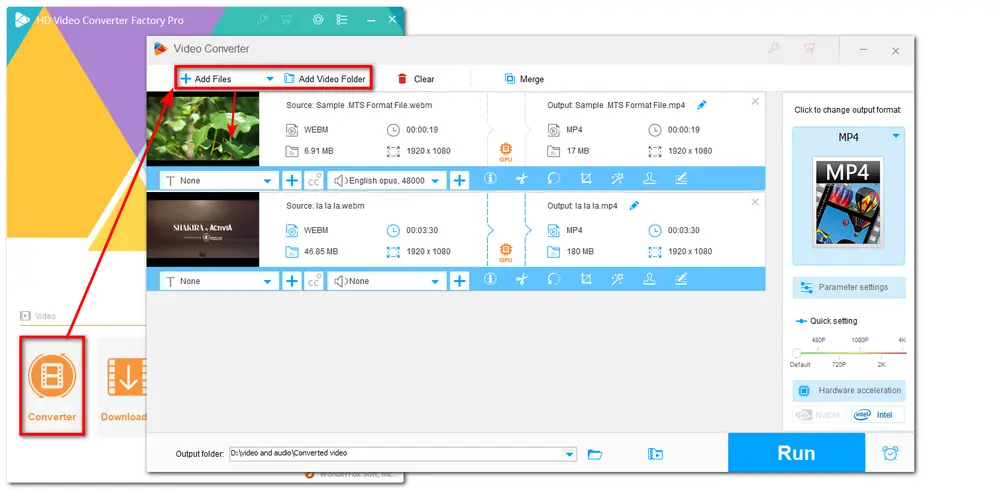
Launch WonderFox HD Video Converter Factory Pro after the installation. Select “Converter” from the initial interface and then hit the “+ Add Files” or “Add Video Folder” button to import your videos (folders) to the workplace. You can also drag the source files and drop them directly.
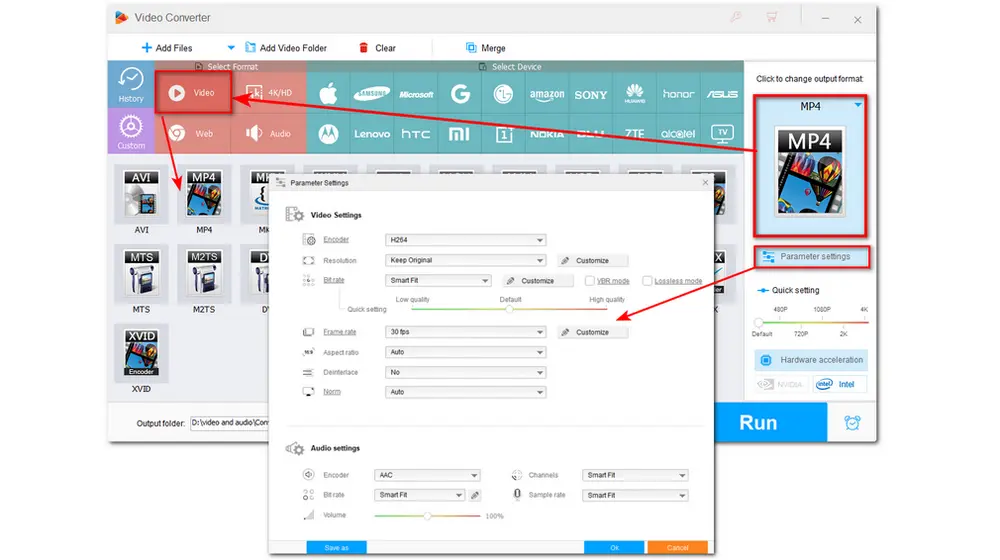
Click the format image on the right side of the interface to expand the output format library. Go to the “Video” tab and choose one supported video format for Plex from Part 1. (MP4 is highly recommended for broad compatibility.)
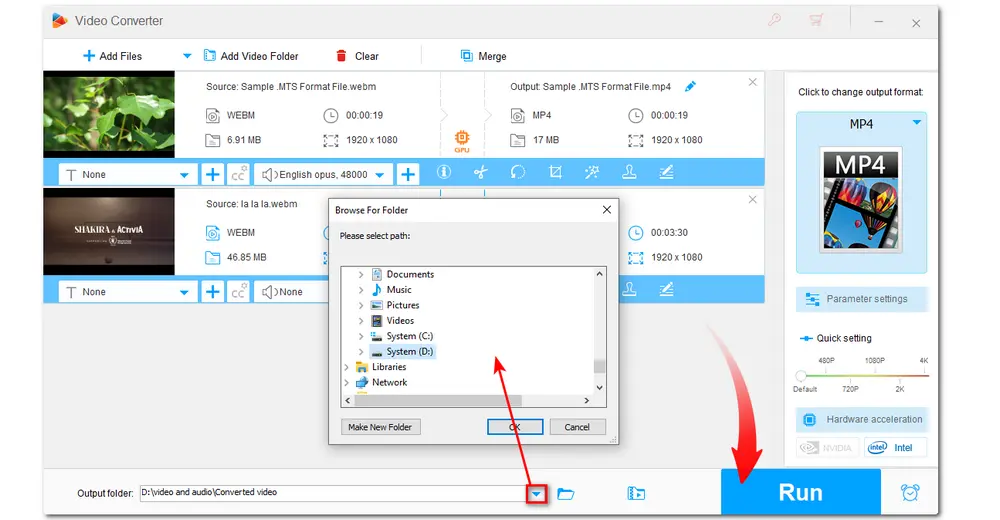
Head over to the “Parameter settings” window and set the video encoder to H.264 and the audio encoder to AAC if you want a safe cross-device target. If you are preparing a 4K file for a client that already Direct Plays HEVC, you can keep H.265 and the original 4K resolution instead of converting everything to H.264.
For MKV or M2TS files with many tracks, you can also keep the needed audio/subtitle track and remove the rest before conversion. If a 4K source is intended for an older or remote client, you can additionally set the resolution to 1920×1080 to create a lighter version for streaming.
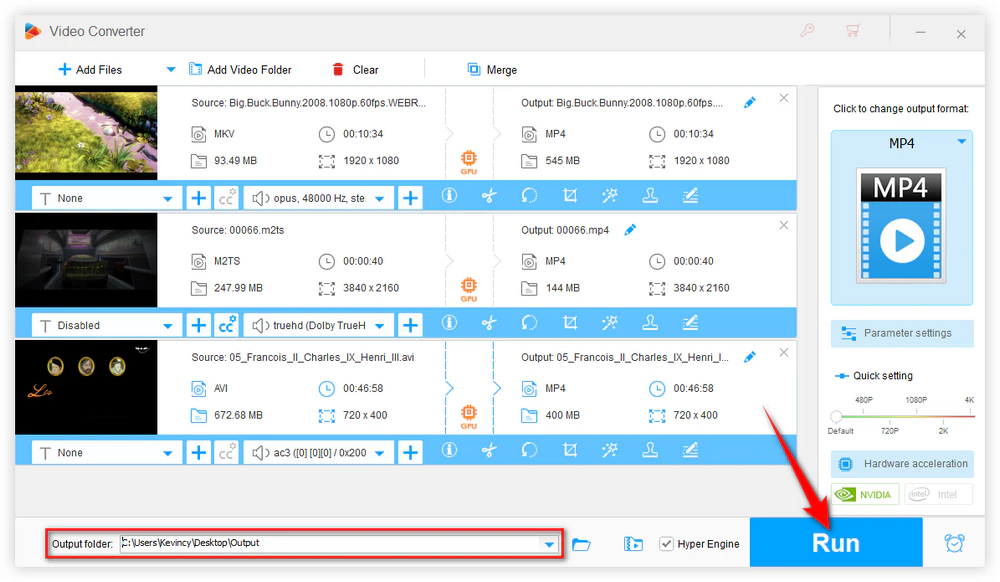
Click the inverted triangle icon at the bottom of the interface to set an output folder for the converted files or leave it as default. Then press “Run” to start converting the video to the Plex-friendly format.
Now, you can add the converted files to Plex and try Direct Play or smoother streaming on your client device.
Also Read: Apple TV Video Format | Google Slides Video Format | LG TV Video Format
The video converter above is for regular digital media files. A DVD ISO image or VIDEO_TS folder is a disc structure, which Plex does not support directly. For this type of source, use a DVD ripper to turn the movie into a normal video file first.
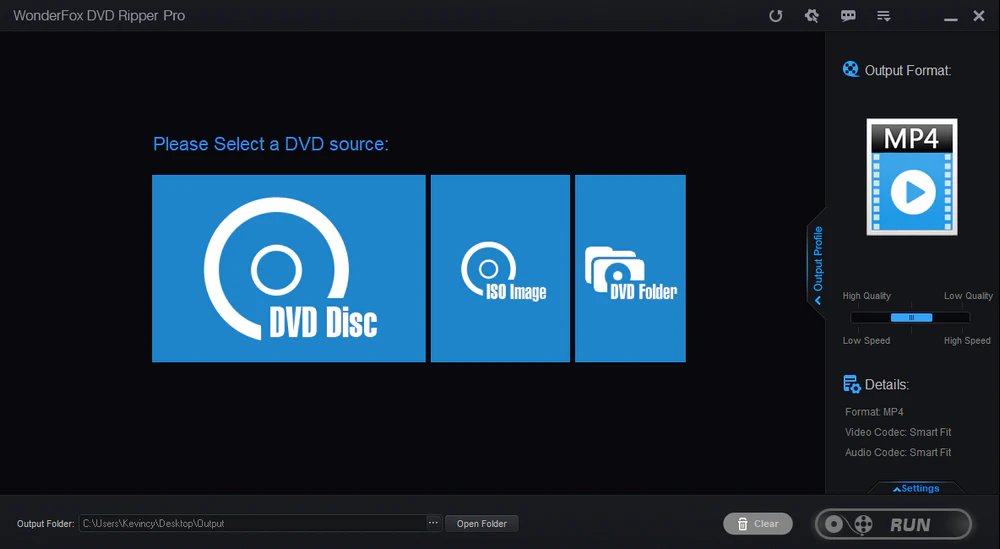
WonderFox DVD Ripper Pro can open DVD discs, DVD ISO images, and VIDEO_TS folders. Load the source, let the program identify the main title, and choose MP4 H.264/AAC for broad Plex compatibility or another format that your target Plex client can Direct Play. Then click “Run” and add the resulting video file to your Plex library.
* Please use DVD conversion only for personal, lawful purposes.
Cut/join/split video & audio without time limit.
Compress large video files with minimal quality loss.
Download online video and music from 1000+ sites
Record computer screen and audio......
Yes, Plex can handle MKV files on many clients, but MKV is only a container. If the video codec, audio codec, subtitle type, or bitrate is not supported by the playback device, Plex may Direct Stream, transcode, or fail to play the file. If Plex does not detect the MKV, check the file naming and library matching first.
Sometimes. Certain Plex clients and Smart TVs can Direct Play some M2TS/TS files, but many M2TS videos are Blu-ray or AVCHD files with high bitrates, multiple audio tracks, DTS/TrueHD audio, or PGS subtitles. These often trigger transcoding. Converting M2TS to MP4 H.264/AAC is usually easier for general streaming.
VOB is not recommended for Plex streaming. It belongs to the DVD VIDEO_TS structure and may include menus, chapters, subtitles, and multiple segments. Convert DVD content or rip Video_TS to MP4 or MKV first for personal fair use.
Xvid is an older MPEG-4 video codec that is often stored in AVI files. Some Plex setups can transcode it, but it is not a reliable Direct Play codec for modern devices. Convert Xvid to H.264 MP4 if you want better Plex compatibility.
Yes, many Plex clients support HEVC/H.265, but Direct Play depends on the specific device and the whole file, including container, bit depth/HDR, resolution, audio, subtitles, and bitrate. If your client cannot decode the HEVC stream, Plex must transcode it or you can convert the file to H.264 in advance.
Yes, Plex can play 4K on compatible devices. The smoothest setup is usually Direct Play with a client-supported 4K file, commonly HEVC/H.265. If the video, audio, subtitles, quality limits, or client capabilities force a full 4K transcode, the server needs substantially more processing power.
No. Plex does not support ISO, IMG, VIDEO_TS, BDMV, or similar disc image/folder formats, and its normal scanners may skip them. Convert or remux the actual movie or episodes to regular MP4, MKV, or another client-compatible media file first.
There is no one format that guarantees Direct Play on every Plex client, but MP4 with H.264 video and AAC audio is the safest baseline for broad compatibility. If you need surround sound, AC3 5.1 is also widely supported. For 4K-capable clients, HEVC can be a better choice when the device can decode it directly. Avoid incompatible subtitles and excessive remote quality limits if you want to reduce unnecessary transcoding.
That is the updated guide to Plex supported formats, the best Plex video format, and practical fixes for HEVC, 4K, ISO, MKV, M2TS, VOB, and Xvid playback issues.
For mixed devices, MP4 with H.264 video and AAC audio is still the easiest baseline for fewer Plex playback errors. For a modern 4K library, keep HEVC/H.265 when your clients can Direct Play it instead of converting everything unnecessarily. If the source is a DVD ISO or VIDEO_TS folder, convert the actual title to a regular media file before adding it to Plex. HD Video Converter Factory Pro can prepare regular digital videos in batch, while DVD Ripper Pro is the more appropriate tool for DVD disc images and folders.

Kevincy joined the WonderFox team in 2014 and has been a senior columnist ever since. With over two decades of experience in the video editing industry, he shares tutorials, tips, and how-to guides on video/audio processing and personal DVD backups. Family-oriented and passionate about helping others, he is dedicated to making video and audio processing easier for readers.


Kevincy joined the WonderFox team in 2014 and has been a senior columnist ever since. With over two decades of experience in the video editing industry, he shares tutorials, tips, and how-to guides on video/audio processing and personal DVD backups. Family-oriented and passionate about helping others, he is dedicated to making video and audio processing easier for readers.

WonderFox DVD Ripper Pro
1. Convert DVD to MP4, MKV, and other digital videos;
2. Rip audio files from DVD to MP3, WAV, FLAC, etc.
3. Remove DVD protections for personal fair use;
4. 1:1 quick copy to ISO image and DVD folder;
5. Cut, rotate, compress, add subtitles, add effects, and more...
* This software is designed for personal fair use only.

Privacy Policy | Copyright © 2009-2026 WonderFox Soft, Inc. All Rights Reserved