First-Class Alternative to Windows Movie Maker
 Recommended by the author
 How to & Tips
 Convert Video

 by Kevincy
Updated on Jun 24, 2026
Want to polish old clips, join family videos, rotate a wrong-way recording, or make a smaller file for sharing? If you still have Windows Movie Maker installed, it can handle many basic edits. This guide shows how to edit videos in Windows Movie Maker, including trim, split, merge, rotate, add music, narration, text, transitions, and export a smaller file.
If needed, try this Windows Movie Maker alternative to edit and convert videos with ease:
Windows Movie Maker was a simple video editor from Microsoft. It helped beginners create home movies with photos, video clips, music, narration, transitions, visual effects, titles, captions, and credits. It was once part of Windows Essentials, but Microsoft ended support for Windows Essentials 2012 on January 10, 2017. That means Movie Maker no longer receives official updates or security fixes.
If Windows Movie Maker is already installed on your computer, you can still use it for basic editing. If you use Windows 10 or Windows 11 and do not have it installed, be careful with unofficial download sites. For newer videos, newer codecs, larger files, real cropping, or split-screen editing, a modern video editor is usually a better choice.
First-class Alternative to Windows Movie Maker
WonderFox HD Video Converter Factory Pro can help you edit videos on Windows without the common Movie Maker limitations. You can trim, split, merge, crop, rotate, flip, compress, add subtitles, add audio tracks, apply effects, make split-screen videos, and convert files to MP4, MOV, MKV, AVI, WMV, WebM, and many device presets. It is especially useful when Movie Maker refuses to import your file or when you need features Movie Maker does not provide.


Yes, but with limits. Windows Movie Maker can still be useful for light edits if you have a working copy on your PC. It is good for trimming unwanted parts, splitting a clip into sections, putting several clips together, rotating a vertical or upside-down video, adding background music, recording narration, and adding simple titles and transitions.
However, Movie Maker is not a current Windows app. It may fail to import videos encoded with newer codecs such as HEVC, AV1, or some high-bitrate 4K files. It also does not include a true crop tool and does not offer a built-in split-screen effect. Below, we will go through the tasks Movie Maker can do first, then explain what to use when it falls short.
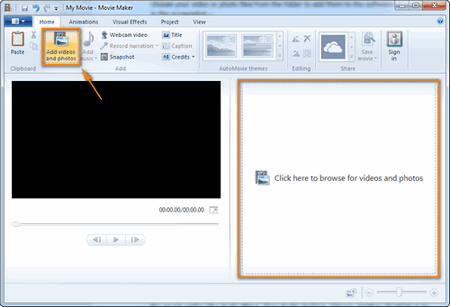
Open Windows Movie Maker. Under the Home tab, click Add videos and photos, then select the video clips or images you want to edit. You can also drag files directly into the storyboard pane on the right.
After the files are loaded, Movie Maker will show them in order. You can drag a clip to a new position at any time. If the program says the file cannot be imported, convert the video to a more compatible format such as MP4 with H.264 video and AAC audio first, then import the converted file again.
Once the video is imported, you can use the tools on the ribbon menu to make common edits. The following parts cover the features most users need: cut, split, merge, rotate, add audio, add narration, add transitions, and add text.
Part 1: Cut, Trim, or Split Videos
To cut off the beginning or end of a video, select the clip, go to Video Tools > Edit, and click Trim tool. Enter the exact Start point and End point, or drag the sliders below the preview window. Then click Save trim to keep the selected section.
You can also right-click a clip on the storyboard and choose Set start point or Set end point. This is quick when you only need to remove the head or tail of the clip.
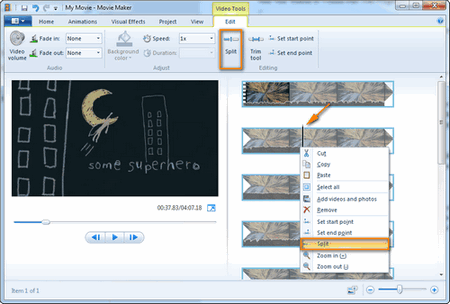
To split a video into multiple parts, move the black vertical playhead to the position where you want to cut, then click Split under the Edit tab. Repeat the operation if needed. To remove an unwanted section, right-click that clip and choose Remove.
Part 2: Combine Several Videos into One
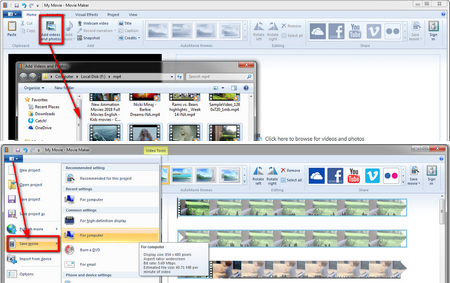
Movie Maker can merge clips in a straightforward way. Click Add videos and photos to import all clips you want to combine. Then drag them on the storyboard to arrange the correct order. You can insert photos, add transitions, and add titles between clips if you want a smoother flow.
When the order looks right, click Save movie and choose an output preset. Movie Maker will export the whole project as one video file.
Part 3: Add Audio, Music, or Narration
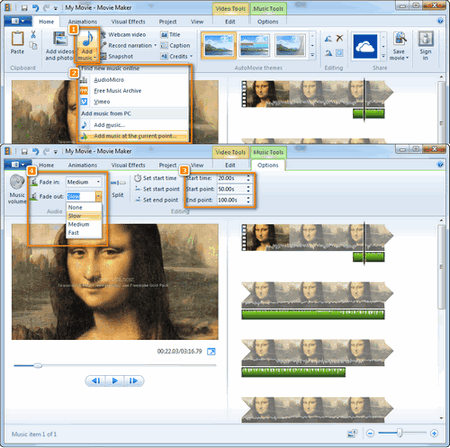
To add background music, click Add music under the Home tab and choose an audio file from your computer. If you only want the music to start from a specific point, place the playhead there and choose Add music at the current point.
After adding music, open Music Tools to adjust the start time, start point, end point, and fade-in/fade-out speed. To add your own voice, click Record narration, press Record, and speak while the video plays. You can then move the narration on the timeline to match the scene.
Part 4: Add Transitions and Visual Effects
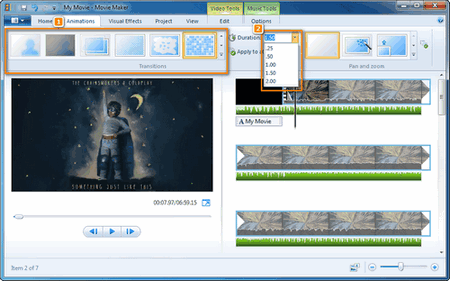
To make two clips or photos connect more naturally, select the second clip, open the Animations tab, and choose a transition effect such as Dissolve, Diagonal, Reveal, Pattern, or Shape. You can also change the transition duration. In most cases, a short and simple transition looks cleaner than a flashy one.
For basic color or style changes, open the Visual Effects tab and preview different effects. Apply them only where they help the story, because too many effects can make a video look dated.
Part 5: Add Text, Captions, and Credits
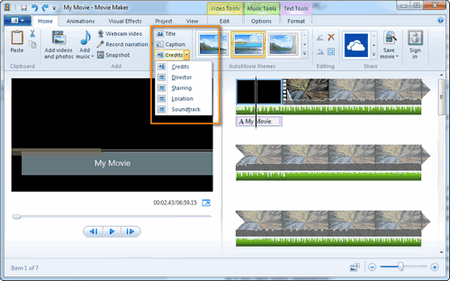
Movie Maker offers Title, Caption, and Credits. Use Title for an opening screen, Caption for text over a clip, and Credits for the ending. After inserting text, use Text Tools to adjust the font, size, color, duration, and animation.
For subtitles, Movie Maker can add caption text manually. But it is not a full subtitle editor, so it is not ideal for long subtitle tracks or SRT files.
Part 6: Rotate a Video
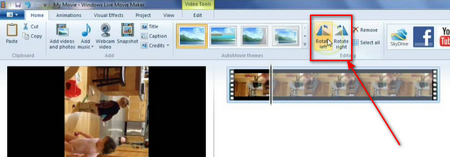
If your phone or camera video appears sideways or upside down, select the clip and use Rotate left 90° or Rotate right 90° on the Home tab. Preview the result on the left player, then save the movie. This is one of the quickest and most reliable edits in Windows Movie Maker.
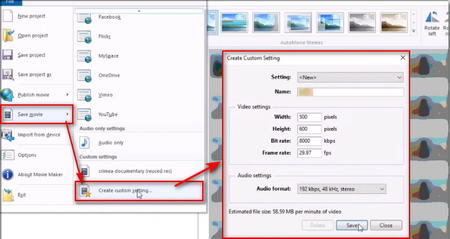
Part 7: Reduce File Size
Movie Maker can make a smaller video during export. Click File > Save movie > Create custom setting. Lower the width, height, bit rate, or frame rate, then save the custom setting and export the video with it. Lower settings usually mean a smaller file, but going too low will make the video blurry or choppy.
When all edits are done, click Save movie on the right side of the toolbar. Choose a preset based on where you will play or upload the video. You can save it to your computer, send it to a phone or tablet, upload it to YouTube, Facebook, or Vimeo, or keep it as a family archive.
Before exporting, preview the whole project once. Check whether the trimmed parts are correct, transitions are not too long, background music does not cover narration, captions stay long enough to read, and the video orientation is right.
Crop video: Windows Movie Maker does not have a real crop tool that cuts away unwanted edges or objects. Its Pan and Zoom effects can create a zoomed-in look, but they do not actually crop the frame. If you need to remove black bars, hide unwanted areas, or set a fixed aspect ratio such as 1:1, 4:3, 16:9, or 9:16, use a dedicated crop tool instead.
Split-screen video: Windows Movie Maker also does not include a built-in split-screen effect. You can place clips one after another, but you cannot put two or three videos in the same frame with Movie Maker alone. For side-by-side videos, reaction videos, comparison videos, or multi-camera layouts, use a split-screen video maker.
Windows Movie Maker is simple, but its age can become a problem. It may not import some MKV, WebM, HEVC, AV1, high-frame-rate, or 4K videos. It can also be slow when handling large files.
If you need a smoother way to edit and export videos on Windows 11/10/8/7, WonderFox HD Video Converter Factory Pro is a practical replacement.

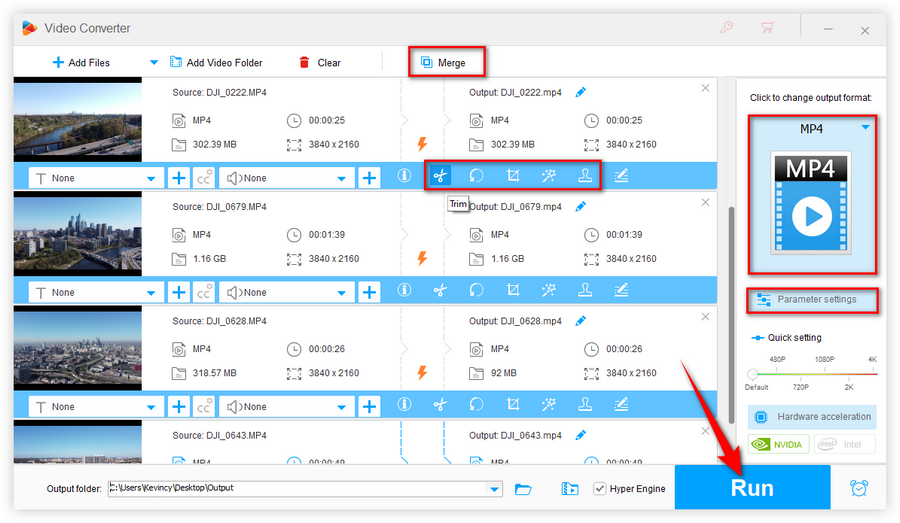
In the Converter module, add your video files, then use the editing toolbar to cut, split, merge, crop, rotate, flip, add effects, add subtitles, or change audio settings. You can also reduce file size by lowering resolution, bit rate, or frame rate, or by choosing a more efficient codec. In the Toolbox, the Split-screen Video Maker lets you place multiple videos in one frame with ready-made templates.
After editing, choose an output format or device preset and click Run. This is useful when you want to keep the workflow simple while avoiding Movie Maker's import and feature limits.
Q1. Is Windows Movie Maker still available from Microsoft?
No. Microsoft ended support for Windows Essentials 2012 in 2017, and Movie Maker is no longer offered as an official Microsoft download. If you already have it installed, it may still work, but it is outdated.
Q2. Can Windows Movie Maker run on Windows 10 or Windows 11?
Some users can run the old Movie Maker on Windows 10 or Windows 11, but compatibility is not guaranteed. Since it is unsupported, a modern editor is safer and more reliable for daily use.
Q3. Why can't I import a video into Windows Movie Maker?
The file may use an unsupported container, video codec, audio codec, resolution, or frame rate. Convert it to MP4 with H.264 video and AAC audio, then try importing it again.
Q4. Can Windows Movie Maker crop videos?
Not in the true sense. It has Pan and Zoom effects, but they only enlarge the picture visually. They do not cut out unwanted parts of the frame. Use a real cropper if you need accurate cropping.
Q5. Can Windows Movie Maker make split-screen videos?
No. Movie Maker does not have a split-screen effect. Use a split-screen video maker if you want to put two or more videos side by side.
Q6. What is the best export format from Windows Movie Maker?
For most users, MP4 is the easiest format to play, upload, and share. If you need a smaller file, create a custom export setting with lower resolution or bit rate, but avoid reducing quality too much.
Final words...
Windows Movie Maker is still easy to understand for simple editing tasks, such as cutting, merging, rotating, adding text, adding music, and exporting a smaller video. But it is no longer maintained, and it cannot truly crop videos or make split-screen videos. If you are editing modern formats or need more flexible tools, use a newer Windows video editor or a dedicated alternative to finish the job faster and with fewer import problems.

Kevincy joined the WonderFox team in 2014 and has been a senior columnist ever since. With over two decades of experience in the video editing industry, he shares tutorials, tips, and how-to guides on video/audio processing and personal DVD backups. Family-oriented and passionate about helping others, he is dedicated to making video and audio processing easier for readers.


Edit, Convert, Compress, and Export Videos Easily
WonderFox HD Video Converter Factory Pro
If Windows Movie Maker cannot import your video or does not offer the edit you need, WonderFox HD Video Converter Factory Pro provides a more complete workflow. It supports 500+ formats and device presets, trims and merges clips, crops and rotates videos, compresses large files, adds subtitles and audio tracks, records screens, downloads online videos, and creates split-screen videos from ready-made layouts.