Free Download
Convert Any Video/Audio to Windows Media Player-friendly Formats
AuthorRecommended by the author

SoftwareHow to & Tips

Video FormatsConvert Video

Resources

How to Fix Windows Media Player Cannot Play the File?

Author: Kevincy by Kevincy

Updated on May 29, 2026

Here are some quick fixes to the problem of video or audio not playing on Windows Media Player. Since converting files to a WMP-supported format is the most efficient method, you can download the powerful video converter to resolve the playback error on your PC:

Windows Media Player is still useful for many Windows users, especially if you prefer the classic player for local videos, music, CDs, and media library management. But it can still fail with common messages like “Windows Media Player cannot play the file,” “the required video codec is not installed,” or “Windows Media Player encountered a problem while playing the file.”

In most cases, the problem is not the file extension alone. MP4, AVI, and MKV are containers, so they may include codecs that Windows Media Player cannot decode, such as HEVC/H.265, AV1, VP9, DTS, or Opus. WebM is also not natively supported by classic Windows Media Player without extra components. Other causes include a damaged file, missing Media Feature Pack on Windows N editions, outdated drivers, or a broken WMP installation. The fixes below combine the most practical solutions for MP4, AVI, WebM, MKV, and general WMP playback errors.

Method 1: Install a Codec Pack for Windows Media Player

Windows Media Player can’t recognize a file encoded with an unsupported video or audio codec. This is why an MP4 may play with no sound, an AVI may show only audio, an MKV may refuse to open, or a WebM file may not play at all. Installing the missing codec can help WMP decode the file without changing the original video. There are two common ways to install codecs for Windows Media Player.

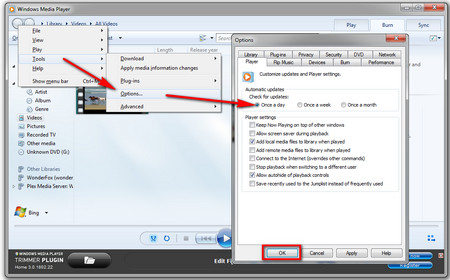
Install Codecs from Windows Media PlayerInstall Codecs from Windows Media Player

1. Update Windows Media Player Codecs Automatically

On Windows Media Player 11, select "Tools" > "Options", check the "Download codecs automatically" box under the "Player" tab, and click "OK" to save the changes. Then, try to play the file again. If it asks you to install the codec, select "Install".


On Windows Media Player 12, navigate to "Tools" > "Options", choose "Once a day" under the "Automatic updates" section, then select "OK". This may help WMP get available player updates. However, it will not always add modern codecs such as HEVC, AV1, VP9, DTS, Opus, or WebM support. In that case, use a codec pack, install Microsoft media extensions, or convert the file instead.

2. Download a Third-party Codec Pack or Microsoft Media Extensions

A codec pack is a convenient way to make Windows Media Player recognize more files. For example, K-Lite Codec Pack can help with many AVI, MKV, and other codec-related playback issues. Here is a good list of codec packs for your reference >> The 5 Best Codec Packs for Playing Video and Audio Files Without Any Issue. Download codec packs only from official or trusted sources and choose the basic/standard edition if you only need playback support.

For WebM or newer MP4 videos, you can also check Microsoft Store for related components, such as VP9 Video Extensions, AV1 Video Extension, Web Media Extensions, or HEVC Video Extensions. Users on Windows 10/11 N editions may need to install the Media Feature Pack first before WMP and related media technologies work properly.

Method 2: Convert the Video/Audio to a File Supported by Windows Media Player   

If you don’t want to install extra codecs or the file still won’t open after installing them, converting the video/audio is usually the cleaner fix. WMV is a safe choice for Windows Media Player, so you can convert videos to WMV. For audio, WMA or MP3 is often more convenient. WonderFox HD Video Converter Factory Pro supports nearly all common video/audio inputs and 500+ output presets. It can convert troublesome MP4, AVI, WebM, MKV, and other files to a format and codec combination that WMP can play.

For best compatibility, you can choose WMV directly. If you prefer MP4, use H.264 for video and AAC or MP3 for audio instead of HEVC, AV1, DTS, or other codecs that classic WMP may not handle well. Download the converter software for preparation.

Free Download Free Download

Easy Steps to Convert Videos to Windows Media Player

Three Steps to Convert Files to WMV

Before start, please free downloadfree download the software.

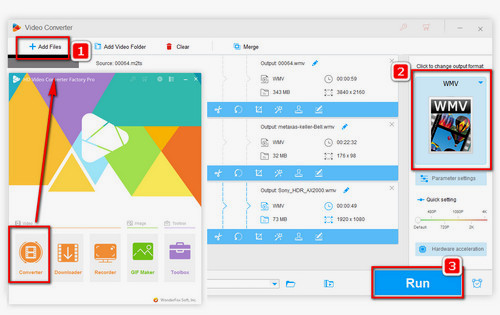
Step 1. Add the Video Files

Open WonderFox HD Video Converter Factory Pro, and select "Converter". Then, click "Add Files" to import your videos or directly drag and drop them into the software .

Step 2. Choose a Windows Media Player-friendly Format

Click the Output Format profile on the right side of the window, and then choose "WMV" under the "Video" tab. This is the simplest choice for WMP. You can also choose MP4 and open "Parameter settings" to set the video encoder to H.264 and the audio encoder to AAC or MP3.

For AVI files, you may keep AVI as the container but change the video/audio encoders to more compatible ones. For MKV or WebM files, converting to WMV or MP4 H.264/AAC is usually more reliable than trying to force WMP to read the original container.

Step 3. Initialize the Process

Hit "Run" on the lower right corner to initiate the conversion. Once the conversion is completed, open the output folder and play the converted file in Windows Media Player. The same workflow also works when WMP shows errors like MP4 not playing, AVI no video, WebM unsupported, MKV not recognized, or “Windows Media Player encountered a problem while playing the file.”

Method 3: Check Whether the File Itself Is Damaged or Blocked

If the same file fails in Windows Media Player, VLC, Media Player, and other players, the file may be incomplete, corrupted, encrypted, or blocked by another program. This is common with interrupted downloads, unfinished file transfers, damaged AVI/MKV files, or videos copied from external drives.

Try these quick checks first: copy the file to a local folder, shorten an overly long file path, right-click the file and choose "Properties" to see whether Windows has blocked it, redownload or re-export the video, and temporarily check whether antivirus or third-party codec tools are interfering with playback. If the file is only slightly damaged, re-encoding it with a video converter may help. If it is severely corrupted, use a dedicated video repair tool or get a new copy of the source file.

Method 4: Update Video and Sound Card Drivers of Your Computer

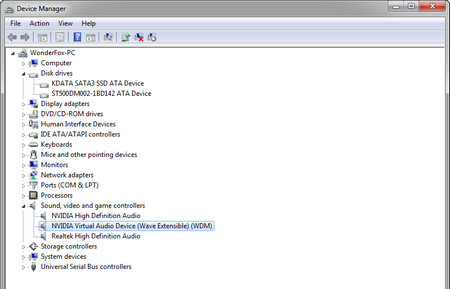
Update Video and Audio Card DriverUpdate Video and Audio Card Driver

When Windows Media Player opens a file but shows only sound, only picture, a black screen, or stuttering playback, the problem may be related to display or audio drivers rather than the media file itself.

Open "Device Manager" on your computer. Expand "Display adapters" and "Sound, video and game controllers", right-click the related device, and choose "Update driver" > "Search automatically for drivers". You can also download the latest graphics or audio driver directly from the device manufacturer's official website. After updating, restart your PC and try the file again.

Method 5: Update, Enable, or Reinstall Windows Media Player

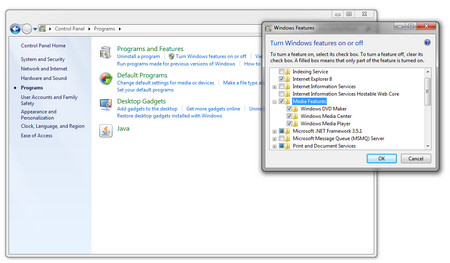
Reinstall Windows Media Player Reinstall Windows Media Player

Updating or reinstalling Windows Media Player can fix errors caused by broken player settings, missing components, or an outdated installation. On Windows 11, the classic app may appear as "Windows Media Player Legacy" and can be managed as an optional feature. On Windows 10/11 N editions, you may also need the Media Feature Pack before WMP works normally.

On Windows 10, open "Settings" > "Apps" > "Optional features" and check whether Windows Media Player is installed. You can also open "Control Panel" > "Programs" > "Programs and Features" > "Turn Windows features on or off", expand "Media Features", uncheck "Windows Media Player", click "OK", restart your PC, and then repeat the steps to enable it again.

On Windows 11, go to "Settings" > "System" > "Optional features" > "View features", search for "Windows Media Player Legacy", and install it if it is missing. If you are using Windows N, install "Media Feature Pack" from Optional features as well. After that, open the file again to see whether the Windows Media Player error goes away.

Method 6: Use a Third-party Media Player

The methods above can solve most Windows Media Player cannot play the file, Windows Media Player cannot find the file, and similar playback errors. However, if you only need to watch the video on your PC and don’t specifically need Windows Media Player, using a Windows Media Player alternative is often the fastest workaround.

VLC Media Player is a popular choice because it can play many MP4, AVI, WebM, MKV, and other files without separate codec installation. PotPlayer and MPC-HC are also common options for local playback. Just remember that using another player only solves playback on your computer. If you need the file to work in WMP, PowerPoint, an older TV, or another device, converting the file to a compatible format is still a better long-term solution.

FAQs About Windows Media Player Playback Errors

Q1. Why won’t Windows Media Player play my MP4 file?

MP4 is only a container. If the video uses HEVC, AV1, high-resolution settings, or an unsupported audio codec such as DTS, Windows Media Player may fail to play it. Convert the file to MP4 with H.264 video and AAC/MP3 audio, or convert it directly to WMV.


Q2. Can Windows Media Player play AVI files?

Yes, but only when the codecs inside the AVI file are supported. If an AVI has no video, no sound, or cannot open, install a codec pack, convert AVI to WMV, or change the AVI video/audio encoders to more compatible ones.


Q3. Does Windows Media Player support WebM?

Classic Windows Media Player does not play WebM files out of the box. You can install related Microsoft media extensions, use a player like VLC, or convert WebM to WMV/MP4 for easier playback.


Q4. Why can’t Windows Media Player play MKV smoothly?

MKV can hold many video, audio, and subtitle tracks. WMP may fail if one of these tracks uses an unsupported codec. Converting MKV to WMV or MP4 H.264/AAC is usually the simplest fix.


Q5. What should I do when WMP says “encountered a problem while playing the file”?

Try the basics first: open another file, test the same file in another player, redownload the file, update or reinstall Windows Media Player, check drivers, and convert the file to a WMP-friendly format. If no player can open the file, the file itself is likely damaged.

Wrap-up

Windows Media Player playback errors usually come down to unsupported codecs, damaged files, missing Windows media components, or outdated drivers. For a one-time local playback need, installing codecs or switching to VLC may be enough. But if you want the file to play reliably in Windows Media Player and other Windows apps, converting it to WMV or MP4 H.264/AAC is the most straightforward solution.


Kevincy

Kevincy Berel

Kevincy joined the WonderFox team in 2014 and has been a senior columnist ever since. With over two decades of experience in the video editing industry, he shares tutorials, tips, and how-to guides on video/audio processing and personal DVD backups. Family-oriented and passionate about helping others, he is dedicated to making video and audio processing easier for readers.

Email

Kevincy

Kevincy Berel

Kevincy joined the WonderFox team in 2014 and has been a senior columnist ever since. With over two decades of experience in the video editing industry, he shares tutorials, tips, and how-to guides on video/audio processing and personal DVD backups. Family-oriented and passionate about helping others, he is dedicated to making video and audio processing easier for readers.

Email

An All-purpose Video Converter to Fix WMP Playback Errors

HD Pro

WonderFox HD Video Converter Factory Pro

It supports a wide range of video/audio codecs, formats, and device presets. You can use it to convert MP4, AVI, WebM, MKV, MOV, FLV, and more to Windows Media Player-friendly formats, adjust video/audio parameters, compress large files, and save online videos for offline playback. The software also includes handy tools such as video editor, GIF maker, subtitle extractor, and ringtone maker.

Free Download Free Download

More Related Articles

How to Play HEVC (H.265) Videos in Windows Media Player? How to Play Videos with H.264 Codec in Windows Media Player? Three Ways to Fix Windows Media Player DTS Codec Issue
Solutions to "Windows Media Player Not Playing Video Only Sound" Issue How to Trim an MP3 File in Windows Media Player? How to Play VOB Files in Windows Media Player? (Solved)