


Need to trim a few seconds from an MP3, split a long WAV recording, merge several AAC clips, adjust the volume, or fix song metadata on a Windows PC? You do not always need a full professional audio workstation for these everyday tasks.
WonderFox Free HD Video Converter Factory is a practical option for quick file-based edits. It works with common formats such as MP3, WAV, M4A, M4R, FLAC, and OGG, and can help you trim or split audio, merge files, change formats, adjust audio parameters, and edit basic metadata. The same workflow works for different audio formats, so you do not need an additional application for these basic jobs.
For more advanced work, such as editing directly on a waveform, applying fades or effects, reducing noise, recording, or mixing multiple tracks, a dedicated audio editor like Audacity, WavePad, or Adobe Audition is a better fit. We will also cover these options later in the article.
Its straightforward workflow is suitable for beginners who need quick audio edits without learning a complex timeline or multitrack interface.
 Download for Free
Download for Free
Download for Free
For simple editing and format processing, WonderFox Free HD Video Converter Factory keeps the workflow easy: import the audio, make the needed changes, choose an output format if necessary, and export. It is not a waveform or multitrack editor like Audacity, so it is better suited to straightforward tasks.
The steps below apply to MP3, WAV, M4A, M4R, FLAC, OGG, and many other supported audio files. DownloadDownload the program on your Windows PC and follow the guide.
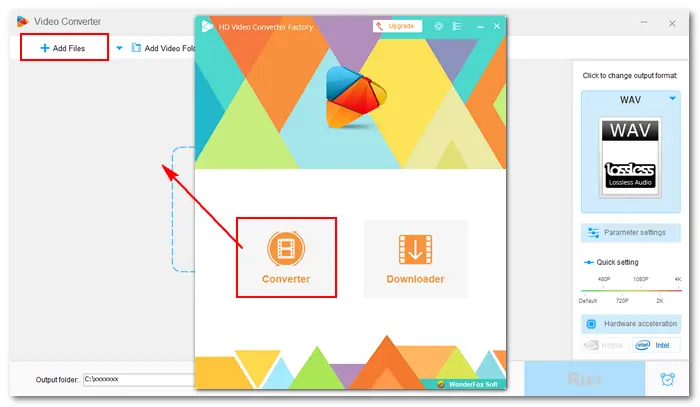
Launch Free HD Video Converter Factory after installation. Open Converter and click Add Files to import one or more audio files from your computer. You can also drag and drop files into the interface.
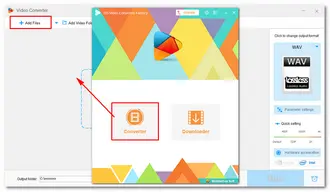
- - Change Audio File Format
Click the format image on the right side of the interface, open the Audio tab, and choose the format you need. For example, you can keep MP3 or AAC when that format already suits your device, or convert the audio to WAV, FLAC, M4A, OGG, or another supported format for compatibility or further processing. If you are preparing an iPhone ringtone, choose the M4R/Apple ringtone preset instead of only renaming a file extension. Changing between lossy formats may involve re-encoding, so avoid unnecessary conversions if preserving quality is your priority.
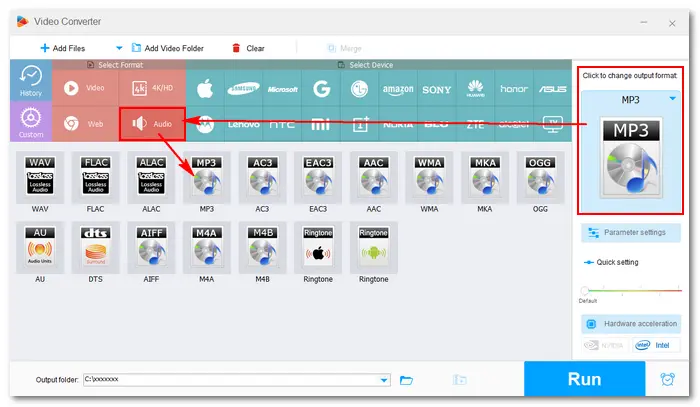
- - Trim Audio
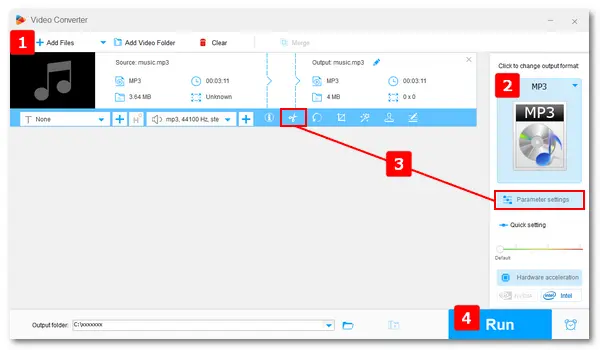
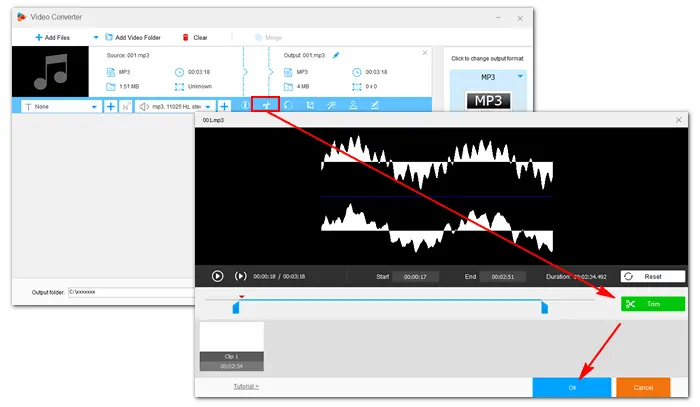
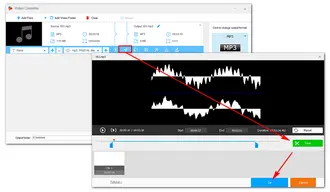
Press the “scissors” icon below the source file to open the trimming window. Drag the sliders or enter precise Start and End times to select the part you want to keep. Preview the selection and click Trim to create a clip. Repeat the process when you want to split a longer audio file into multiple clips. This is also useful for cutting a short section from a song before exporting it as an M4R ringtone. When finished, press OK to return to the main window.
- - Adjust Audio Settings
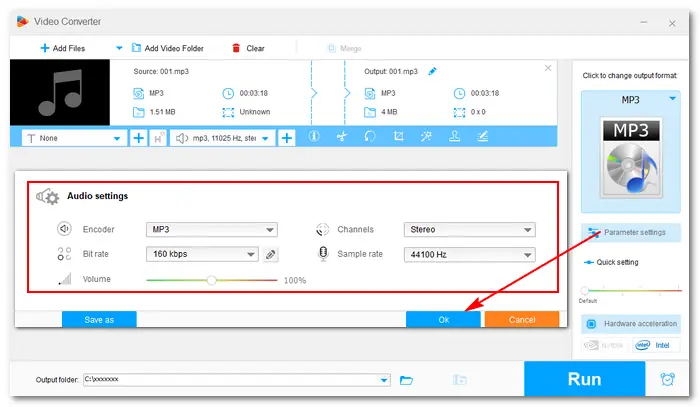
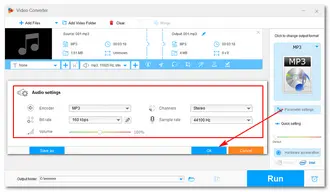
Open Parameter settings to adjust the audio bitrate, sample rate, channels, and volume. Matching the source settings can help avoid unnecessary changes when you simply want a similar output profile. For uncompressed PCM WAV files, quality is mainly tied to settings such as sample rate, bit depth, and channels rather than a lossy-codec bitrate target, and increasing any value cannot restore detail that is already missing from the source. Raising the volume too much may also cause clipping or distortion. Click OK after making your changes.
- - Merge Music Files
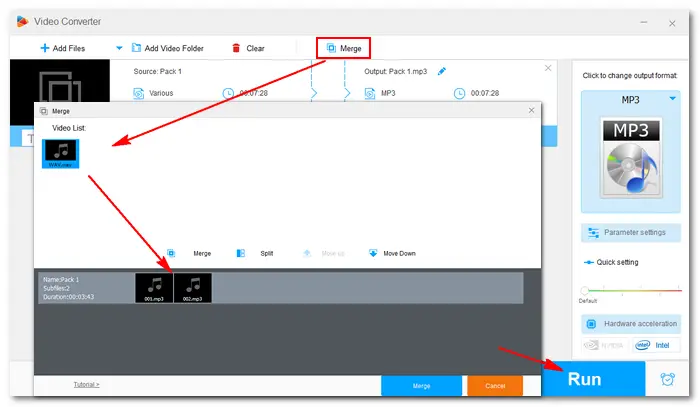
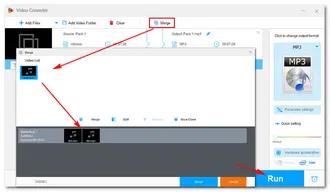
If you have two or more audio files, click Merge on the top menu bar to open the merge window. Add the files to a pack, rearrange their order if needed, and confirm the merge. This works for common audio formats and is useful for combining songs, recordings, or short clips into one continuous file.
- - Edit Audio Metadata
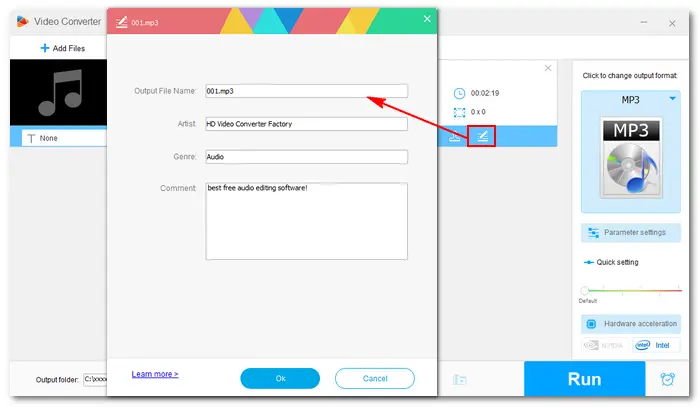
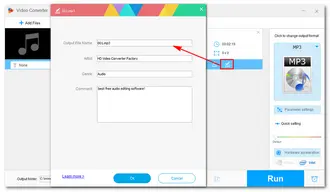
Click the last small Metadata icon below the source file to edit basic information such as the title, artist, genre, and comment. Then click OK. Metadata-only changes are different from waveform edits and generally do not require you to alter the audible content of the track. Note that WAV metadata support is less consistent across players and libraries than tags in formats such as MP3 or M4A, so some fields may not appear everywhere.
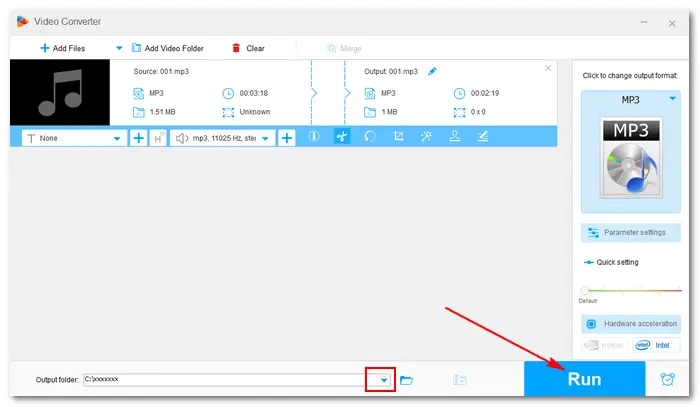
After editing, click the inverted triangle button at the bottom to choose an output folder. Make sure the output format and audio settings are what you want, and then press Run to export the edited file. Keep the original source file until you have checked the result.
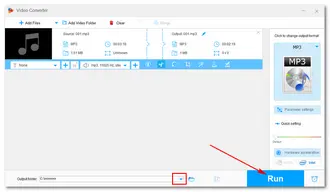
That is the basic workflow for editing common audio files on Windows. It is best for quick trimming or splitting, merging, format conversion, parameter adjustment, and metadata edits without the learning curve of a full audio production program.
 Download for Free
Download for Free
Download for Free
The free WonderFox tool above is convenient for quick file-based edits, but some jobs need a real waveform or multitrack editor. The following options are better when you need effects, fades, noise reduction, recording, mixing, or more precise control.
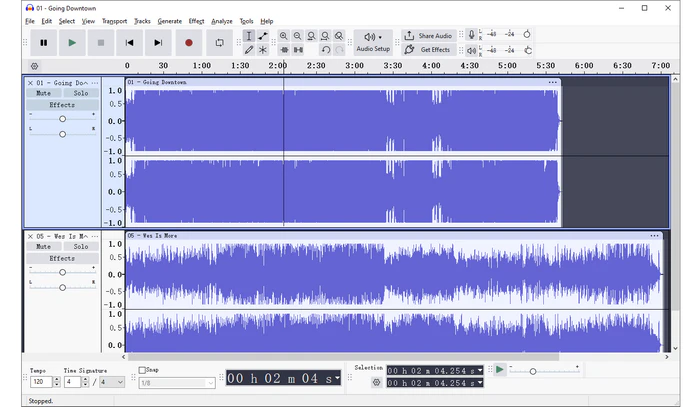
Audacity is a free, open-source, multitrack audio editor and recorder. It is a better choice than a converter-style editor when you need to work directly with waveforms, make precise cuts, split clips, apply fades or effects, reduce noise, record audio, or mix multiple tracks.
To make a basic edit, open the audio file, select the section on the waveform, use the Trim, Cut, or Split command you need, and then export the result. Keep in mind that exporting an already-compressed MP3 or AAC file back to a lossy format usually re-encodes it. For projects that require repeated editing, working in a lossless format such as WAV or FLAC before making the final compressed export can help avoid repeated generation loss.
Website: https://www.audacityteam.org/
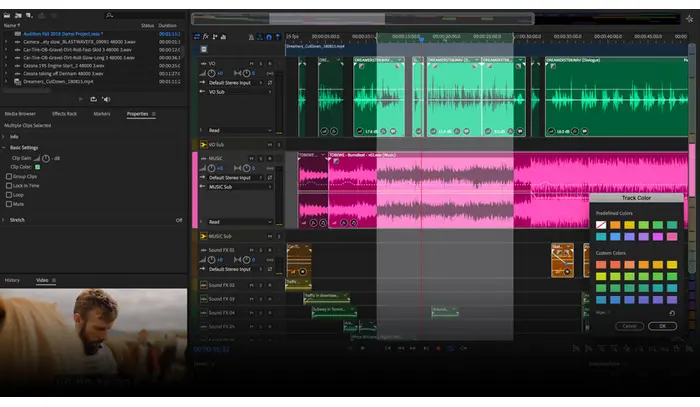
Adobe Audition is a professional audio editor for Windows and macOS with both waveform and multitrack editing environments. It is designed for recording, precise editing, restoration, mixing, and other production work. Its wider toolset makes it more suitable for experienced users than for someone who only needs to trim or join a few audio files. If you are on Windows 10, check compatibility before installing: as of September 2026, Adobe Audition 26.5 lists Windows 11 version 24H2 as the minimum supported Windows release.
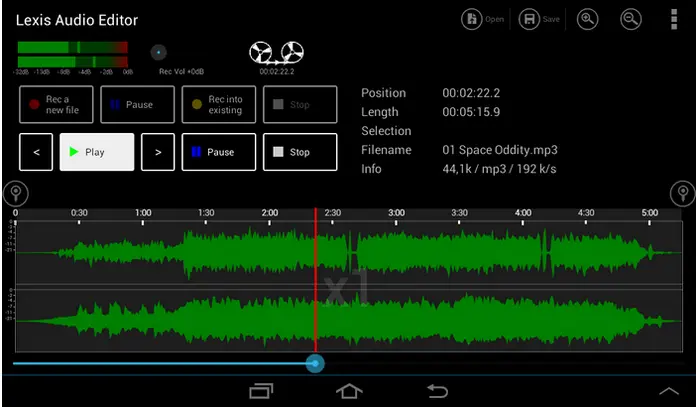
If you are looking for a relatively straightforward editor, Lexis Audio Editor can handle common tasks such as recording, cutting, normalizing, changing speed or pitch, mixing, and applying fade-in or fade-out effects. It is more editor-oriented than a converter, while still being simpler than a full professional production suite.
Website: https://www.lexisaudioeditor.com/
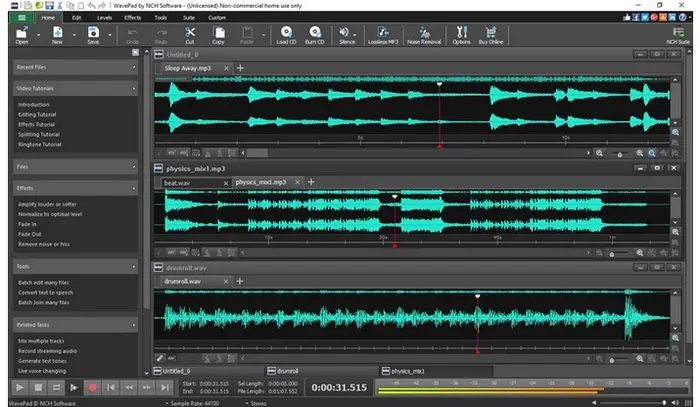
WavePad Audio Editing Software is a full-featured editor for Windows and macOS. It can record audio, cut, copy, paste, delete, trim, split, join, and apply effects such as echo, reverb, normalization, and noise reduction. A free edition is available for non-commercial home use, while paid editions provide additional features.
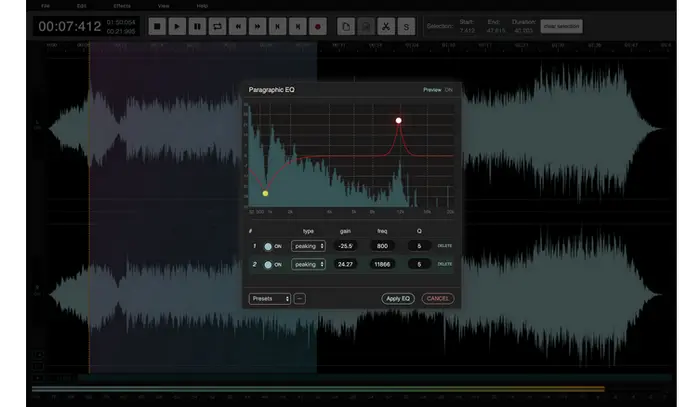
AudioMass is a free, open-source, browser-based waveform editor. It is useful when you do not want to install desktop software and need quick operations such as cutting, reversing, adjusting volume, applying delay or compression, and exporting audio. Because files are handled in the browser, it is a convenient option for occasional lightweight edits.
Website: https://audiomass.co/
Windows does not include a full general-purpose waveform editor comparable to Audacity. The classic Windows Media Player can help manage music and edit some media information, but it is primarily a player and library manager rather than a complete audio editor. Trimming in Windows Media Player generally requires a third-party plug-in. Also, Windows Movie Maker was discontinued years ago and should not be treated as the default audio editor for modern Windows 10 or 11 PCs.
It depends on the type of edit and the software. Changing metadata does not normally alter the audible audio stream. However, trimming, applying effects, changing volume, or converting the format may require re-encoding. Since MP3 and AAC are lossy formats, re-encoding can introduce some generation loss even when you select the same bitrate. For important files, keep the original and avoid repeated lossy exports.
Use Free HD Video Converter Factory when you mainly need quick trimming or splitting, merging, format conversion, audio parameter adjustment, or basic metadata editing. Choose Audacity or WavePad when you need waveform editing, fades, effects, noise reduction, recording, or more detailed control. Adobe Audition is better suited to professional multitrack production and restoration workflows.
Keep the original WAV and export to WAV again when you want to stay in an uncompressed or lossless workflow. Simple cutting does not have the same repeated lossy-compression issue as exporting MP3 or AAC again, although resampling, changing channel layout, applying effects, or converting to a lossy format can still alter the audio. Also remember that converting a low-quality source to WAV will not improve the original sound.
Yes. M4R is commonly used for iPhone ringtones, and a Windows audio tool that supports the format can trim, split, merge, convert, and adjust it much like other audio files. In Free HD Video Converter Factory, you can import supported M4R files and use the same basic editing workflow above. When the goal is an iPhone ringtone, choose an M4R/Apple ringtone preset for export rather than only changing the file extension.
Editing audio on Windows can be simple when you match the tool to the job. For quick file-based tasks such as trimming or splitting, merging, converting formats, adjusting parameters, and editing metadata, Free HD Video Converter Factory offers an easy workflow for common files. For waveform editing, effects, noise reduction, recording, or multitrack work, use a dedicated editor such as Audacity, WavePad, or Adobe Audition.
Whichever tool you choose, keep your original files and be careful with repeated exports to lossy formats. That will give you more flexibility if you need to revise the edit later.

Kevincy joined the WonderFox team in 2014 and has been a senior columnist ever since. With over two decades of experience in the video editing industry, he shares tutorials, tips, and how-to guides on video/audio processing and personal DVD backups. Family-oriented and passionate about helping others, he is dedicated to making video and audio processing easier for readers.


Kevincy joined the WonderFox team in 2014 and has been a senior columnist ever since. With over two decades of experience in the video editing industry, he shares tutorials, tips, and how-to guides on video/audio processing and personal DVD backups. Family-oriented and passionate about helping others, he is dedicated to making video and audio processing easier for readers.

Terms and Conditions | Privacy Policy | License Agreement | Copyright © 2009-2026 WonderFox Soft, Inc. All Rights Reserved