

Successful local playback on Chromecast depends on more than a file extension. The container, video codec, audio codec, resolution, and frame rate must all be compatible with the receiving device.
This guide covers legacy Chromecast models, Chromecast with Google TV, Google TV Streamer, and TVs with Google Cast. It also explains how to cast local files and convert incompatible videos when you get an unsupported format message, black screen, no sound, or excessive buffering.
 Kevincy | Updated on Aug 7, 2026
Chromecast was Google's line of streaming devices for sending movies, music, photos, browser tabs, and local media from a phone, tablet, or computer to a TV. Google ended Chromecast production in 2024 and replaced it with Google TV Streamer, but existing Chromecast devices continue to work and Google Cast remains available on Google TV Streamer and many compatible TVs.
The exact playback capability varies by model. A file that works on Google TV Streamer may exceed the codec, resolution, or frame-rate limit of an older Chromecast. The next section separates containers from codecs so you can choose a reliable output instead of judging compatibility by the filename alone.
Convert unsupported local videos to MP4, WebM, H.264, HEVC, VP8, VP9, AAC, and other formats in batches. Chromecast device presets are included, and you can adjust resolution, frame rate, bitrate, audio codec, and subtitles for smoother casting.
Google Cast support is based on a combination of container + video codec + audio codec + device limit. Renaming a file or looking only at .mp4, .mkv, or .avi is not enough to determine whether it will play.
For the widest compatibility across Chromecast generations, use MP4 with H.264 video and AAC audio. WebM with VP8 or VP9 video and Vorbis audio is another supported combination, but codec and resolution support still varies by device.
Google's current Supported Media for Google Cast page lists MP2T, MP3, MP4, OGG, WAV, and WebM containers. For ordinary local video, MP4 and WebM are the most relevant choices. MPEG-DASH, Smooth Streaming, HLS, and progressive download are also supported delivery methods through compatible receiver apps.
• Chromecast 1st and 2nd Gen:
H.264 High Profile up to level 4.1 (720p/60fps or 1080p/30fps)
VP8 (720p/60fps or 1080p/30fps)
• Chromecast 3rd Gen:
H.264 High Profile up to level 4.2 (1080p/60fps)
VP8 (720p/60fps or 1080p/30fps)
• Chromecast Ultra:
H.264 High Profile up to level 4.2 (1080p/60fps)
VP8 up to 4K/30fps
HEVC/H.265 Main and Main10 up to level 5.1 (4K/60fps)
VP9 Profile 0 and Profile 2 up to level 5.1 (4K/60fps)
HDR with Dolby Vision and HDR10
• Chromecast with Google TV:
H.264 High Profile up to level 5.1 (4K/30fps)
HEVC/H.265 Main and Main10 up to level 5.1 (4K/60fps)
VP9 Profile 2 up to 4K/60fps
• Google TV Streamer:
H.264 High Profile up to level 5.2 (4K/60fps)
HEVC/H.265 Main and Main10 up to level 5.1 (4K/60fps)
VP9 Profile 2 up to 4K/60fps
AV1 Main Profile up to level 5.1 (4K/60fps)
Common Google Cast audio codecs include FLAC (up to 96kHz/24-bit), HE-AAC, LC-AAC, MP3, Opus, Vorbis, WAV (LPCM), and WebM audio. AC-3, E-AC-3, MPEG-H Audio, and Dolby Atmos can be available through passthrough when the receiver app and playback hardware support them.
DTS is not included in Google's native codec list. Therefore, a movie may show video but produce no sound when its audio track is DTS or another unsupported codec. Converting DTS to AAC is the safest fix, while AC-3 or E-AC-3 can be suitable for compatible home theater setups.
Containers such as MKV, AVI, MOV, FLV, and WMV are not listed as standard Google Cast video containers. A third-party player or media server may accept them and transcode them during casting, but direct playback is not guaranteed. An unsupported video track may cause a black screen, an unsupported audio track may cause no sound, and an oversized resolution, frame rate, or bitrate may lead to buffering.
For predictable playback, convert the file to a compatible combination rather than simply changing its extension.
Changing the container and codecs is the most reliable way to fix an unsupported format error, black screen, missing audio, or repeated buffering. Merely renaming the extension does not change the video or audio streams inside the file.
WonderFox HD Video Converter Factory Pro is a Windows video converter with batch processing, hardware acceleration, more than 500 output profiles, and direct Chromecast presets. It can process MKV, AVI, MOV, FLV, WMV, and other source formats in the same workflow, so the following steps apply to almost any local video.
Get the software on your PC, then follow the steps below.
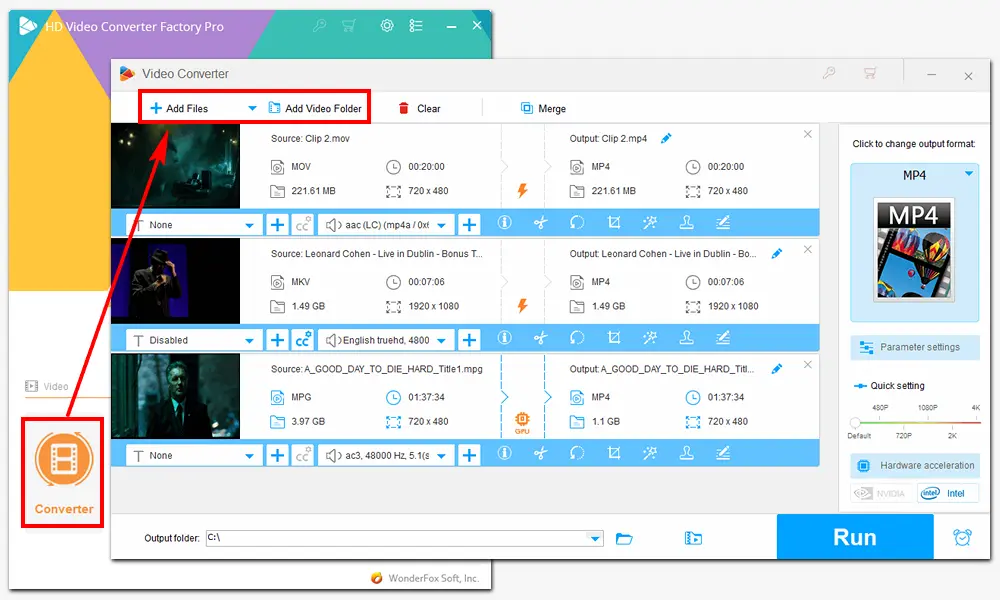
Step 1. DownloadDownload and install HD Video Converter Factory Pro on your Windows PC. Launch it and open Converter. Click Add Files or drag and drop one or multiple unsupported videos into the program.
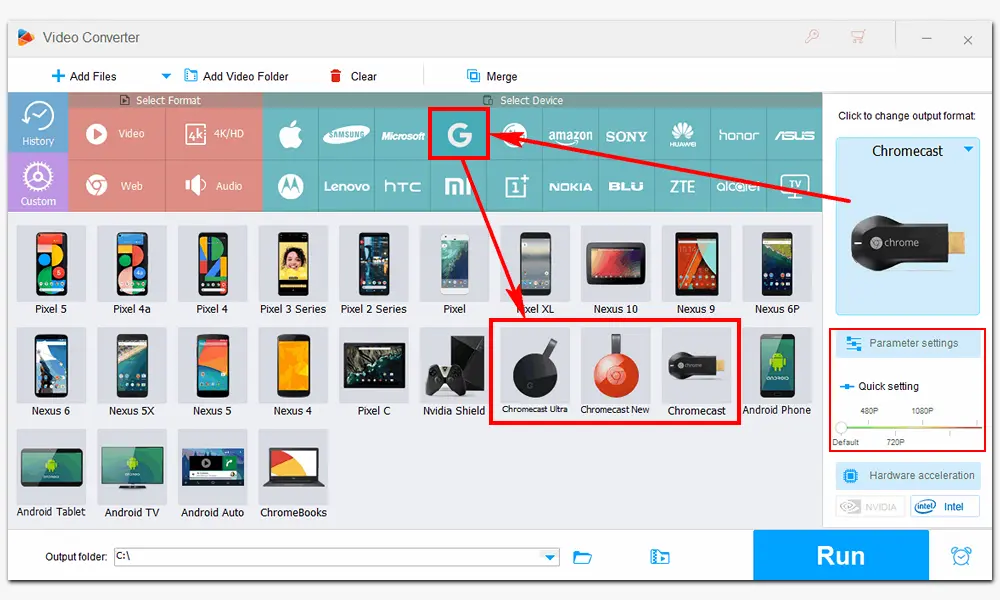
Step 2. Click the format image on the right. Open the G (Google) category and choose the preset for your Chromecast model.
For broad compatibility, you can instead choose Video > MP4. Open Parameter settings and use H.264 for video and AAC for audio when the original codecs are unsupported. Keep the resolution and frame rate within your device limits, especially on 1st- and 2nd-generation Chromecast.
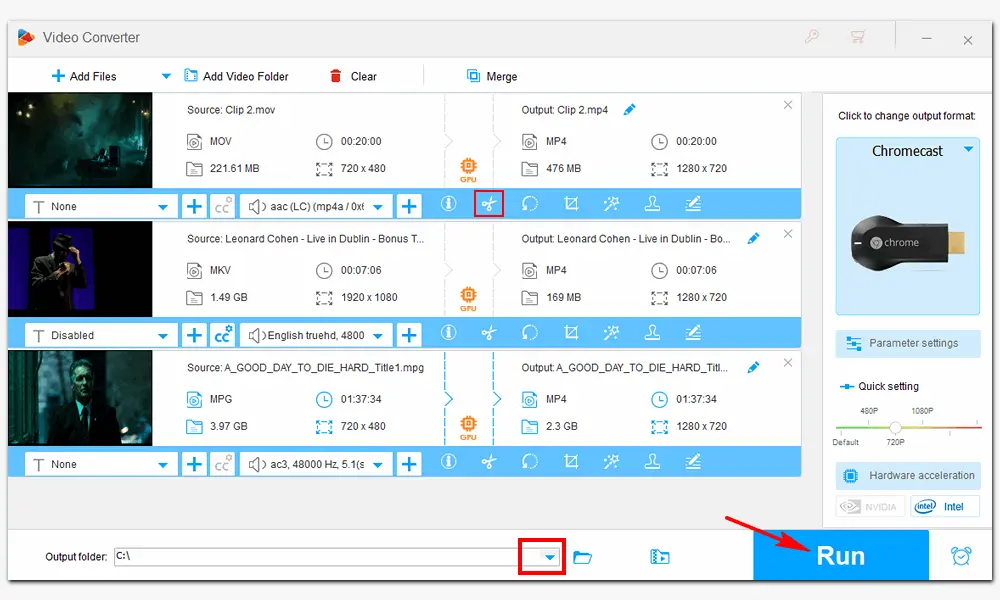
Step 3. Click the bottom ▼ button to choose an output folder. Finally, press Run to batch export Chromecast-compatible files. After conversion, cast the new files using one of the methods below.
Optional. Add a subtitle track before conversion. Hardcoding subtitles into the picture is the most dependable option when an embedded or external subtitle cannot be recognized during casting.
Before casting, connect the sending device and Chromecast, Google TV Streamer, or Google Cast-enabled TV to the same Wi-Fi network. A strong connection is important for high-bitrate or 4K video.
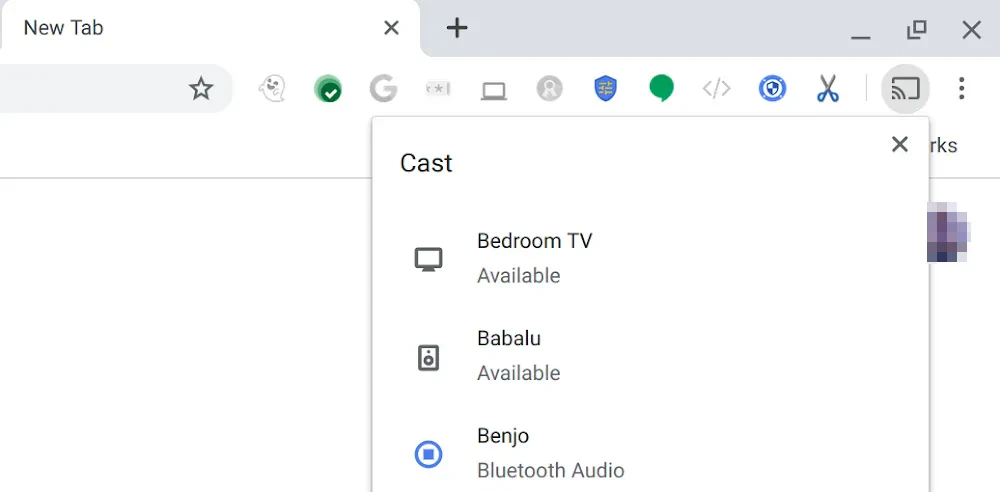
On a computer, open the video in Chrome by dragging it into a tab or pressing Ctrl + O on Windows or Command + O on Mac. Then open More > Cast, save, and share > Cast, and select the receiving device.
This method works best when Chrome can already play the file in the tab. If the file will not open, has no sound, or casts only a black screen, convert it to MP4 with H.264 and AAC first.
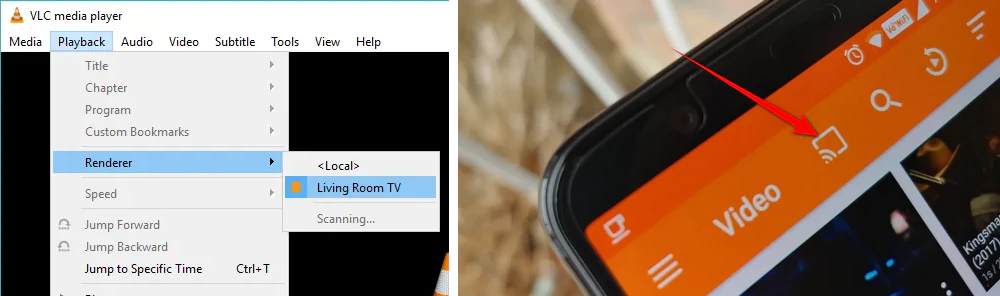
A media player such as VLC can send local files to a Chromecast-compatible receiver. On desktop VLC, open Playback > Renderer and select the device, then play the video. On mobile, open the file in a Cast-enabled player and tap its Cast icon.
Some players transcode unsupported media during casting. This can make an MKV, AVI, or another container appear to work, but the result depends on the app, computer or phone performance, codecs, subtitles, and network quality.
Media server software such as Plex can organize a local library and transcode incompatible files for Chromecast during playback. It is convenient for a large collection, but real-time transcoding requires enough CPU or GPU power and may cause buffering. Pre-converting difficult files is usually more stable.
Confirm that both devices use the same Wi-Fi network, update the casting app and Chrome, and restart the router and receiver. On iOS 14 or later and macOS 15 or later, allow Local Network access so the app or browser can discover Google Cast devices.
MKV and AVI are not included in Google's standard Cast container list. They may still play through an app that remuxes or transcodes them, but direct playback is not guaranteed. Converting to MP4 with H.264 and AAC provides a more consistent result.
The audio track is probably unsupported. DTS is a common cause with movie files. Convert the audio to AAC for broad compatibility, or use AC-3/E-AC-3 only when your receiver app, TV, and audio equipment support passthrough.
The video codec, profile, level, resolution, or frame rate may exceed the receiving device's capability. Re-encode the video to H.264 and select a resolution and frame rate supported by your Chromecast model.
Google Cast receivers can support TTML, WebVTT, and CEA-608/708 captions, but subtitle handling varies by app. Embedded SRT, ASS, or PGS subtitles may not appear during direct casting. Use a player that can transcode subtitles, convert them to a supported format, or hardcode them into the video.
No. Chromecast Ultra, compatible Chromecast with Google TV models, and Google TV Streamer can handle 4K under supported codec and frame-rate limits. Older Chromecast models are limited to 1080p or below. The TV, HDMI connection, app, and network must also support the selected 4K and HDR mode.
For the fewest compatibility problems, use MP4 with H.264 video and AAC audio, then keep the resolution and frame rate within the limit of your Chromecast or Google TV device. Remember that a supported extension alone does not guarantee that the video, audio, and subtitles inside the file will work.
You can cast a compatible local file from Chrome, VLC, or a media server. When direct playback causes no sound, a black screen, or buffering, WonderFox HD Video Converter Factory Pro can batch convert the files to a suitable Chromecast preset or a broadly supported MP4 profile.

Kevincy joined the WonderFox team in 2014 and has been a senior columnist ever since. With over two decades of experience in the video editing industry, he shares tutorials, tips, and how-to guides on video/audio processing and personal DVD backups. Family-oriented and passionate about helping others, he is dedicated to making video and audio processing easier for readers.


Kevincy joined the WonderFox team in 2014 and has been a senior columnist ever since. With over two decades of experience in the video editing industry, he shares tutorials, tips, and how-to guides on video/audio processing and personal DVD backups. Family-oriented and passionate about helping others, he is dedicated to making video and audio processing easier for readers.
WonderFox DVD Ripper Pro
1. Bypass DVD copy protection like region code & CSS;
2. Convert DVDs to MP4, MKV, H.264, & 300+ formats;
3. Rip MP3, WAV, OGG, M4A, etc. from DVD movies;
4. Copy DVD to PC, tablet, USB, HDTV, and other devices.
5. Support multiple audio tracks and subtitles;
* Please refer to the DVD copyright laws before ripping a DVD.

Privacy Policy | Copyright © 2009-2026 WonderFox Soft, Inc. All Rights Reserved
