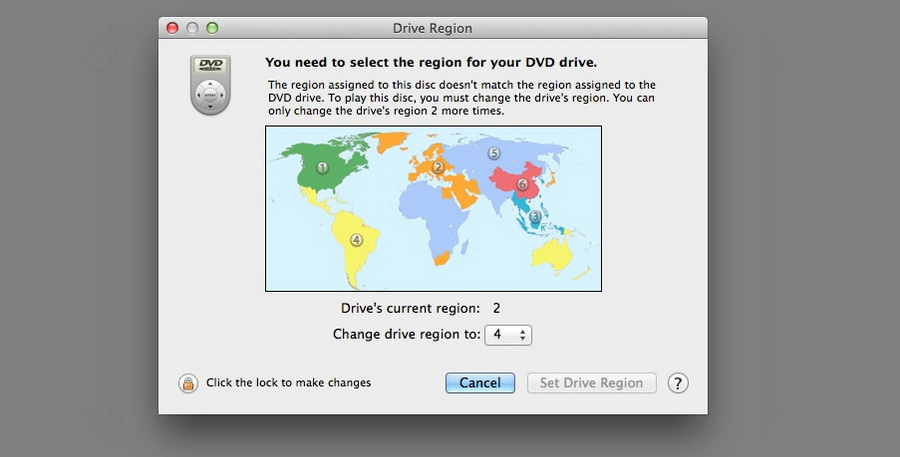
Q1. What DVD region are the USA and Canada?
Both the United States and Canada use DVD Region 1. A standard Region 1 disc sold in one country will normally work in a Region 1 player in the other country.
Q2. Can I convert a Region 2 DVD to Region 1?
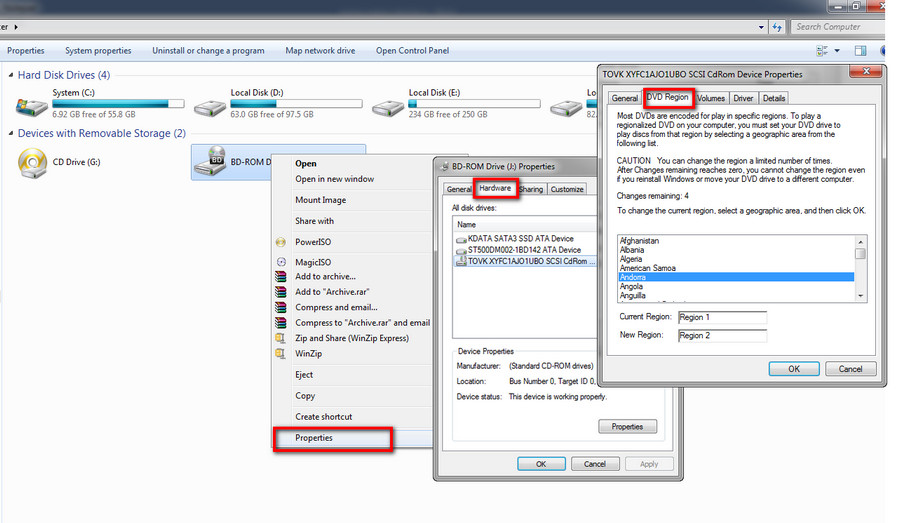
You normally cannot rewrite the region code of a commercially pressed Region 2 DVD and turn that physical disc into a Region 1 disc. Practical options are to use a Region 2/multi-region player, change a computer DVD drive to a compatible region if changes remain, or digitize your own disc to a region-free video file for personal playback.
Q3. Will a Region 3 DVD play in the US?
Not on a standard region-locked Region 1 player. Region 3 covers much of Southeast Asia and includes markets such as Hong Kong, South Korea, and Taiwan. Use a compatible Region 3/multi-region player or another lawful personal-playback method.
Q4. Can I play a Region 1 DVD in Australia?
Usually not on a standard Australian Region 4 DVD player. A multi-region player, a compatible computer drive setting, or a personal region-free digital copy can solve the region mismatch. Also check NTSC support on older equipment.
Q5. Is DVD region code the same as PAL or NTSC?
No. Region code is a geographic playback-control system, while PAL and NTSC are video-system standards. They do not map one-to-one, so solving the region issue does not always solve a PAL/NTSC compatibility problem.
Q6. How many times can I change a DVD drive region, and will reinstalling Windows reset it?
Many modern RPC2 DVD drives allow up to five region settings/changes, and the remaining count is typically enforced by the drive hardware or firmware. Once the count is exhausted, reinstalling Windows normally does not restore it. Apple also limits supported Mac DVD drive region settings to five in total, including the original setting.
Q7. What do Region 0, ALL, and region-free mean?
These labels are commonly used for DVDs intended to play across multiple regions rather than being restricted to a single geographic region. Always remember that PAL/NTSC compatibility can still be a separate issue on older playback hardware.



 How to & Tips
 Rip DVD
 by
by 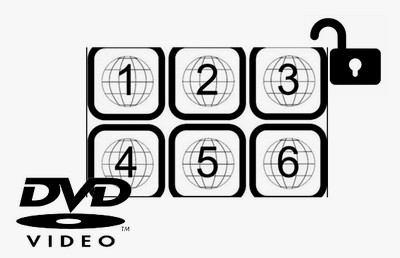


 Free Download
 Product Page
 Windows, 100% Clean!