

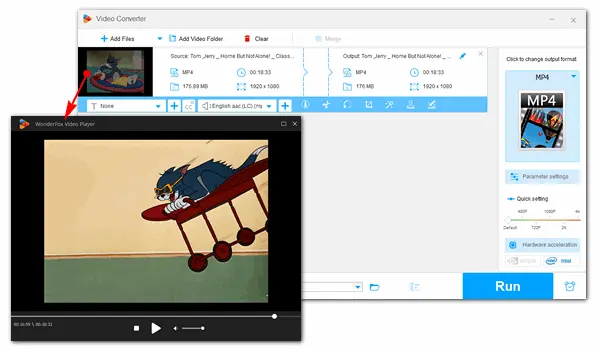


MP4 is a container format, so two files with the same .mp4 extension can use completely different video and audio codecs. A typical MP4 encoded with H.264 video and AAC audio can usually play directly on Windows 10 and Windows 11. Problems are more likely when the file uses a codec your player does not have, the video is too demanding for the PC, the file is incomplete or damaged, or the content is protected.
If you just want to open an ordinary MP4, try the built-in Windows player first. If that fails, VLC or PotPlayer can handle many more codec combinations. When you need the file to work reliably in different players or on another device, WonderFox Free HD Video Converter Factory can convert the MP4 to a more widely supported combination such as MP4 with H.264 video and AAC audio.
Windows 10 note: Windows 10 still works and can play MP4 files, but Microsoft ended regular support for Windows 10 on October 14, 2025. If your PC supports Windows 11, moving to a supported Windows version is recommended for ongoing security updates.

 Download for Free
Download for Free
Download for Free
Here are four practical ways to open MP4 files on Windows 10 or Windows 11. Start with the built-in player, then move to a third-party player or the online option if needed.
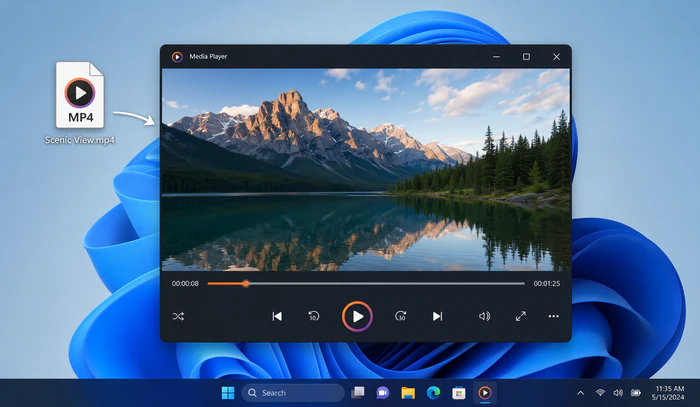
On Windows 11, the newer Media Player app is the best place to start for ordinary MP4 playback. Microsoft still provides Windows Media Player Legacy as an optional feature on Windows 10 and Windows 11, and many Windows 10 PCs already have it installed.
Windows 11: Locate the MP4 file, right-click it, and choose Open with > Media Player. You can also open Media Player first and add the video from there.
Windows 10: Right-click the MP4 file and select Open with > Windows Media Player. If Windows Media Player is missing, it may be available through Windows optional features.
Windows includes native support for common codecs such as H.264 and AAC. However, an MP4 that contains HEVC/H.265, AV1, or another codec may still require an additional codec/extension, a different player, or conversion.


VLC media player is a free and open-source player that supports a broad range of video and audio codecs. It is a useful second choice when an MP4 plays incorrectly in the built-in Windows player, especially when the file uses a less common codec.
Website: https://www.videolan.org/vlc/download-windows.html
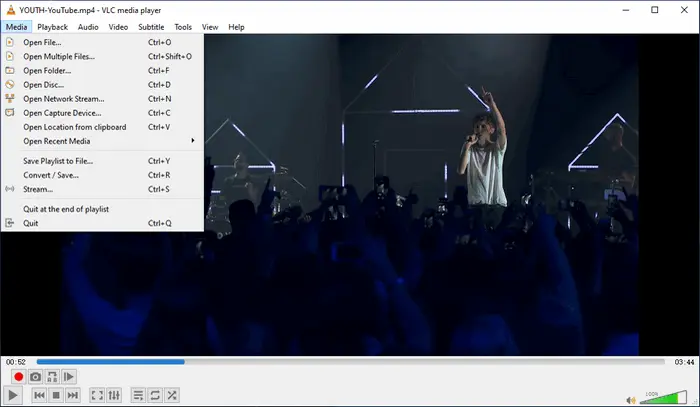
Step 1: Install VLC on your Windows 10 or Windows 11 computer.
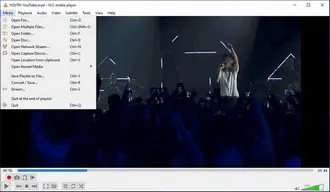
Step 2: Click Media > Open File (Ctrl + O), locate the MP4 file, and click Open.
To play several videos in sequence, use Media > Open Multiple Files, add the videos, and start playback. You can also open a folder and browse the files in VLC.
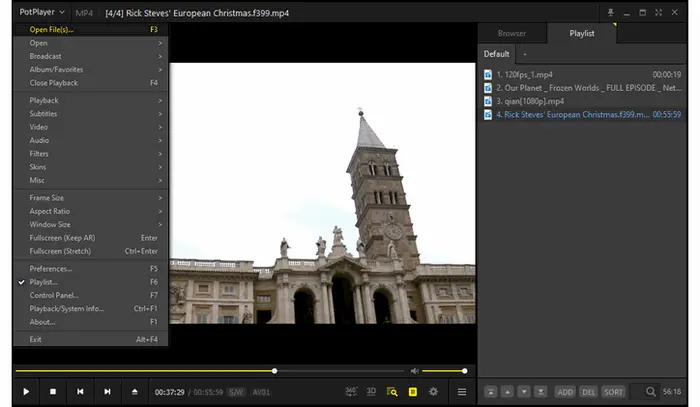
PotPlayer is another Windows-only media player with extensive playback and customization options. It can handle many codecs and lets advanced users adjust decoding, subtitles, audio output, hardware acceleration, and other settings.
Website: https://potplayer.daum.net/
Step 1: Install PotPlayer on your Windows PC.
Step 2: Open the PotPlayer menu in the top-left corner and select Open File(s).
Step 3: Select the MP4 video and click Open. You can add more files to the playlist on the right for continuous playback.
Related Resource: PotPlayer H.265/HEVC Support
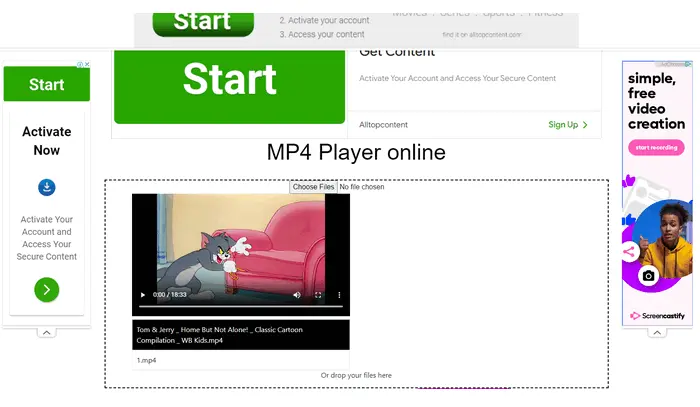
If you do not want to install another desktop player, you can try an online or browser-based MP4 player. MP4.to currently provides an MP4 playback page that runs in the browser.
Website: https://mp4.to/mp4-player/
Step 1: Open the page and select or drag in the MP4 file.
Step 2: Wait for the file to load, then use the playback controls to watch the video.
Browser playback still depends on browser-supported codecs. If the MP4 uses an unsupported codec, a desktop player such as VLC or converting the file is more reliable.

If one MP4 plays normally but another does not, the .mp4 extension itself is usually not the problem. Check the codec, file integrity, system load, and source of the video before changing random Windows settings.
Windows supports common codecs such as H.264 video and AAC audio out of the box. HEVC/H.265 may require the HEVC Video Extensions, while AV1 support can depend on the AV1 Video Extension and your hardware/software setup. Starting with Windows 11 version 24H2, AC-3 (Dolby Digital) is no longer included with Windows by default, although it may still be present on upgraded systems or devices where the manufacturer provides it.
If the MP4 plays in VLC but not in Media Player, a codec difference is a strong clue. You can install the appropriate Microsoft Store extension, keep using a player with broader built-in decoding support, or convert the file to H.264/AAC.
If you prefer a codec pack, K-Lite Codec Pack is still actively maintained and its Standard edition is designed for broad playback support with DirectShow-based players such as the bundled MPC-HC. Website: https://codecguide.com/download_kl.htm. However, the newer Windows Media Player uses Media Foundation, so installing K-Lite does not automatically add every codec to that app. For the modern Windows player, Microsoft Store codec extensions or conversion are usually the cleaner options.
Converting is useful when you need a copy that opens consistently in Windows players, presentations, editors, TVs, or other devices. You do not have to change the MP4 container: changing the codecs inside the file is often enough.
Step 1: Download and install WonderFox Free HD Video Converter Factory.
Download for Free
Download for Free
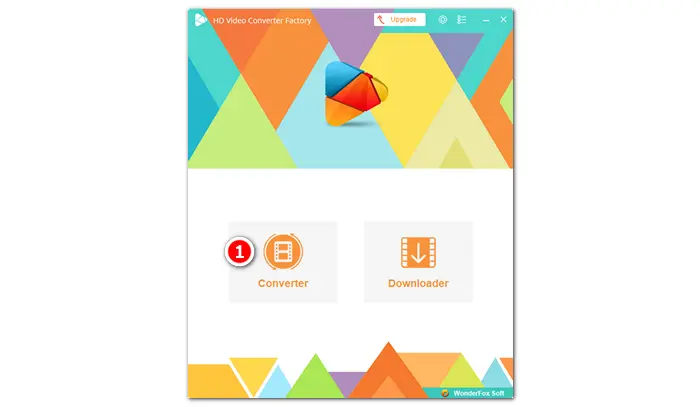
Step 2: Run the program and click Converter.
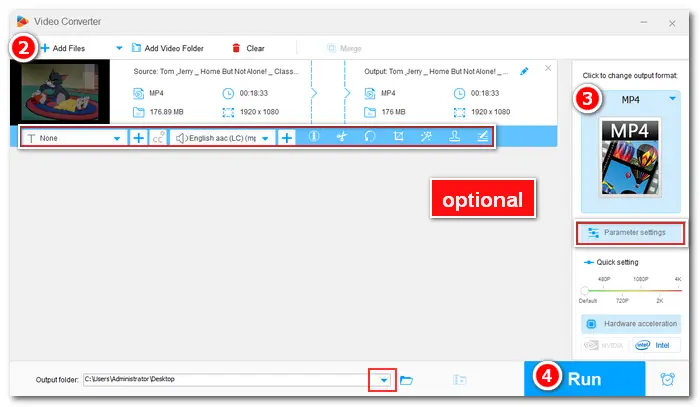
Step 3: Click Add Files and import the MP4 video.
Step 4: Open Output Format and choose MP4 under the Video category. If needed, open Parameter settings and use H.264 for video and AAC for audio.
Step 5: If a 4K or high-frame-rate video is too demanding for an older PC, you can also lower the resolution to 1080p or reduce other parameters. Do this only when smooth playback is the problem; it is not necessary for a simple codec mismatch.
Step 6: Choose an output folder and click Run. Then open the converted MP4 in Media Player, Windows Media Player, or another player.
Also Learn: Convert MP4 to Windows Media Video (WMV)
If many MP4 files fail only in one player, the app itself may be outdated or misconfigured. Update the player and Windows first. For Microsoft Store apps, open Microsoft Store > Library and check for updates. If the built-in player still behaves abnormally, Windows also provides Repair and Reset options for supported apps under Settings > Apps > Installed apps on Windows 11, or Apps & features on Windows 10. Resetting can remove custom app settings, but it does not delete your MP4 files.
If security software blocks or quarantines a downloaded MP4, verify the file source and scan it instead of disabling antivirus protection system-wide. A normal codec mismatch should not require turning off Windows Security.
A failed download, interrupted copy, damaged storage device, or incomplete recording can leave an MP4 that no player can decode correctly. Compare the file size with the source if possible and try downloading or transferring it again. If the only copy is already damaged, use a reputable video-repair tool on a duplicate of the file rather than the original.
If the MP4 opens but stutters, freezes, or drops frames, the issue may be decoding performance rather than format support. Close resource-heavy apps, update the graphics driver, try a player with hardware acceleration, and test the video again. On older hardware, making a 1080p copy can be more practical than forcing smooth 4K playback.
An MP4 obtained from a subscription, rental, workplace, or protected service may require the provider’s app or an authorized account. In that case, changing codecs is not the right fix. Use the official playback method or obtain an authorized, unprotected copy from the content provider when available.
Windows 10 N and Windows 11 N editions omit some media technologies and apps. If you use an N edition and basic media playback features are missing, install the Media Feature Pack from Settings > Apps > Optional features, then restart the affected apps or the PC if required.
Related troubleshooting guides:
Q1. Can Windows 10 and Windows 11 play MP4 without extra codecs?
Usually, yes, when the MP4 uses common codecs such as H.264 video and AAC audio. The .mp4 extension alone does not guarantee compatibility, so an MP4 encoded with HEVC, AV1, AC-3, or another codec may behave differently.
Q2. Why does an MP4 play in VLC but not in Media Player?
VLC includes support for many codecs that may not be available to the Windows player by default. If VLC works, the file itself may be fine. You can keep using VLC, install the needed codec/extension, or convert the MP4 to a more broadly supported codec combination.
Q3. Why does an MP4 have video but no sound on Windows 11?
The audio codec may be unsupported even when the video codec works. This can happen with AC-3 audio, especially on a clean installation of Windows 11 version 24H2 or later where AC-3 is no longer included by default. Try another player, install the appropriate component when available, or convert the audio track to AAC.
Q4. Does converting MP4 reduce video quality?
Re-encoding is normally lossy, but sensible settings can keep the visible difference small. If the original already uses a compatible codec, do not convert it just for the sake of conversion. Use another player first, or convert only when you need better compatibility or lower hardware requirements.
For most users, the simplest order is: try the built-in Windows player, try VLC or PotPlayer, identify whether the codec is the problem, and convert only when necessary. That approach avoids needless quality loss while still giving you a reliable way to play troublesome MP4 files on Windows 10 and Windows 11.

Kevincy joined the WonderFox team in 2014 and has been a senior columnist ever since. With over two decades of experience in the video editing industry, he shares tutorials, tips, and how-to guides on video/audio processing and personal DVD backups. Family-oriented and passionate about helping others, he is dedicated to making video and audio processing easier for readers.


Kevincy joined the WonderFox team in 2014 and has been a senior columnist ever since. With over two decades of experience in the video editing industry, he shares tutorials, tips, and how-to guides on video/audio processing and personal DVD backups. Family-oriented and passionate about helping others, he is dedicated to making video and audio processing easier for readers.

WonderFox HD Video Converter Factory Pro adds batch conversion, GPU acceleration, higher-resolution output options, a screen recorder, downloader, GIF tools, and other utilities on top of the free converter. If you frequently process multiple MP4 files or want more control over conversion and recording tasks, the Pro edition provides a broader workflow in one Windows application.
Download for Free
Download for Free

Terms and Conditions | Privacy Policy | License Agreement | Copyright © 2009-2026 WonderFox Soft, Inc. All Rights Reserved