

MP3, M4A, and AAC are common audio formats, but they are still audio files. When you upload them to video-only platforms, social media editors, or some website builders, they may be rejected because there is no video track. The practical fix is not to simply rename the file or wrap the audio in an MP4 container, but to convert audio to a real video with an image. In this way, your song, podcast, narration, voice memo, or ringtone can be played as a normal MP4 or AVI video.
BTW, here's a simple video/audio processor for novice users, which might be more user-friendly for those just starting out: https://www.videoconverterfactory.com/download/hd-video-converter-pro.exehttps://www.videoconverterfactory.com/download/hd-video-converter-pro.exe
 Kevincy | Updated on Jun 11, 2026
On older Windows 10 PCs, the built-in Photos Legacy app may still include the classic Video Editor. It can add one image to a storyboard, place an audio file over it, and export the result as an MP4 video.
Note: This method is not limited to MP3. You can use the same idea for M4A and AAC files as long as the editor can import the audio. If it fails to read the audio, convert the audio to MP3 first, then add it to the project.
Step 1. Open Microsoft Photos Legacy, click "New video" button in the top-right corner and create a "New video project".
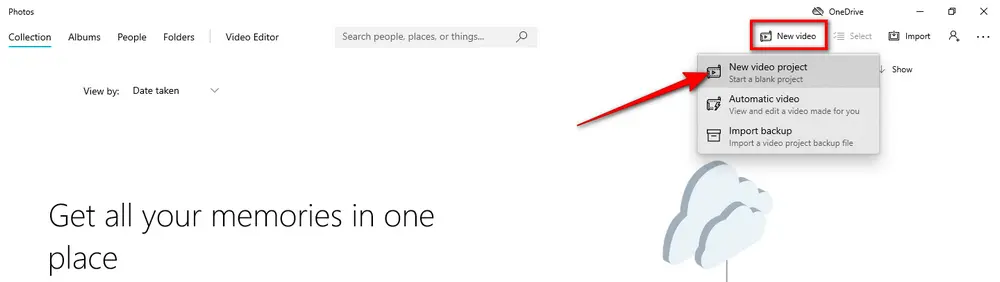
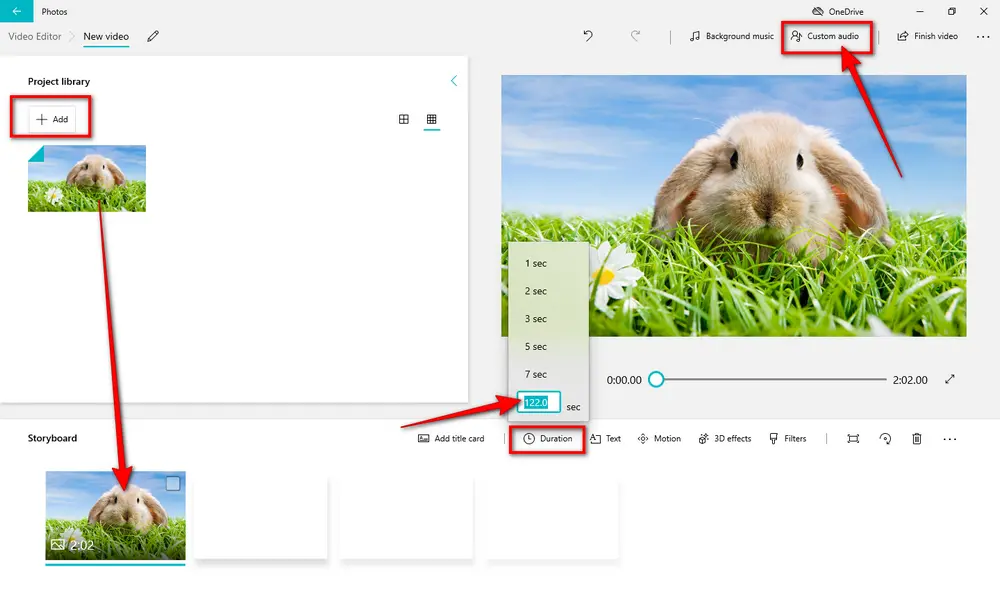
Step 2. You'll be asked to name your video and click OK. Navigate to "Project library" section, click "+ Add" button to load one image. Then drag and drop it to "Storyboard". You can also add more images to create a video slideshow.
Step 3. Click "Duration" to input the total time length of your MP3 in seconds. For example, the length of my MP3 sample file is 00:02:02, so I enter "122" seconds in "Duration". Next, press "Custom audio" button on the top bar.
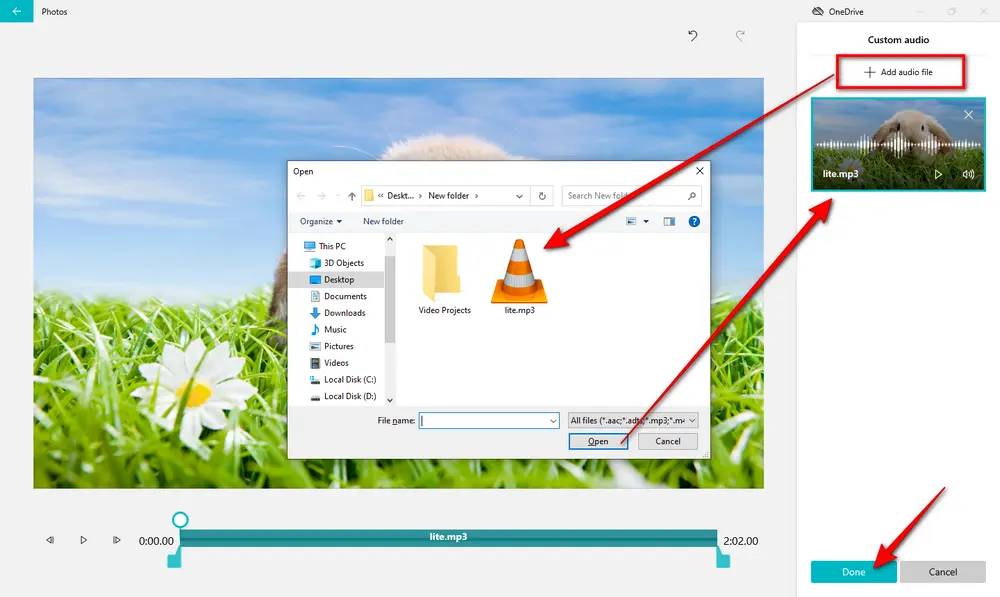
Step 4. Click "+ Add audio file" button to add your MP3 file, then click "Done".
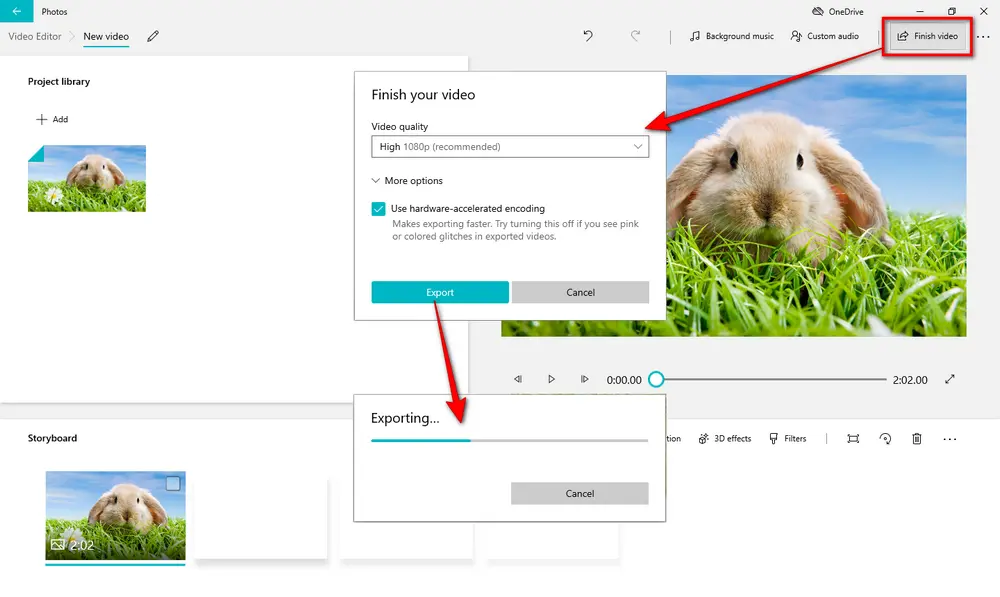
Step 5. Finally, click "Finish" video button in the top-right corner, select video quality and hit "Export" button to convert MP3, M4A, or AAC to MP4 with image. For most video-sharing sites, MP4 with H.264 video and AAC audio is the safest choice.
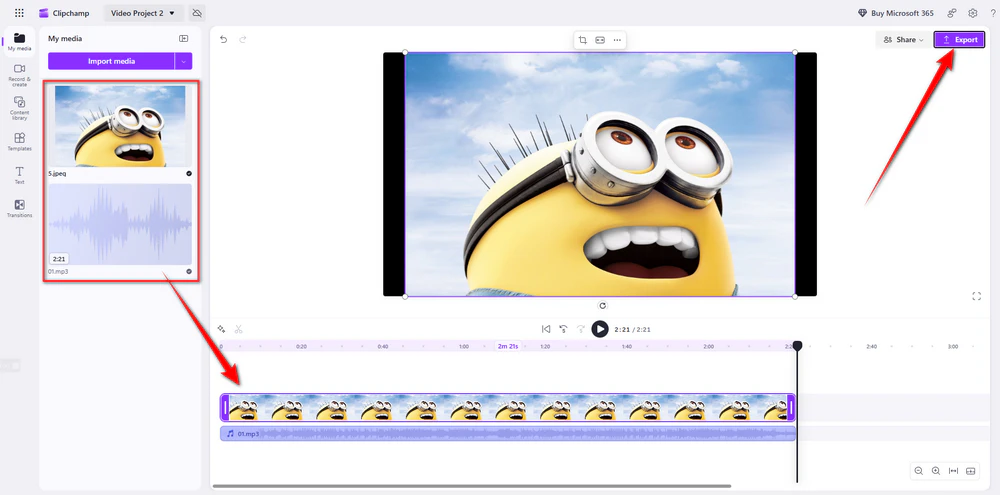
On newer Windows 10/11 systems, Microsoft has moved this kind of lightweight video editing workflow to Clipchamp. If you can still open the old Video Editor in Photos, follow the steps above.
If not,
As a matter of course, it's totally an open-and-shut case for a video editing program. Simply speaking, you only need to add an image as a video track and merge it with an audio file, resulting in a real video file. Instead of paying for those professional costly non-linear editing workstations, a few free video editors like OpenShot, VSDC Free Video Editor, and Shotcut are sufficient for this job. Next, I'll take OpenShot (official website: https://www.openshot.org/) as an example to demonstrate how to convert MP3/M4A/AAC to MP4 with image.
Do not confuse this with a basic "audio to MP4" converter that creates an audio-only MP4 file without a visible picture. That kind of file may still be treated as audio or fail to upload. For YouTube, Facebook, Vimeo, and similar platforms, add a real image or video background.
Step 1. Launch OpenShot Video Editor, drag and drop your MP3, M4A, or AAC audio and image file to "Project Files" box.
Step 2. Separately add audio and image into different timelines and keep them aligned. Drag the right edge of the image clip until it covers the whole audio length. You can also add more audio files and image sequences to create a slideshow or a music video longer than 2 hours.
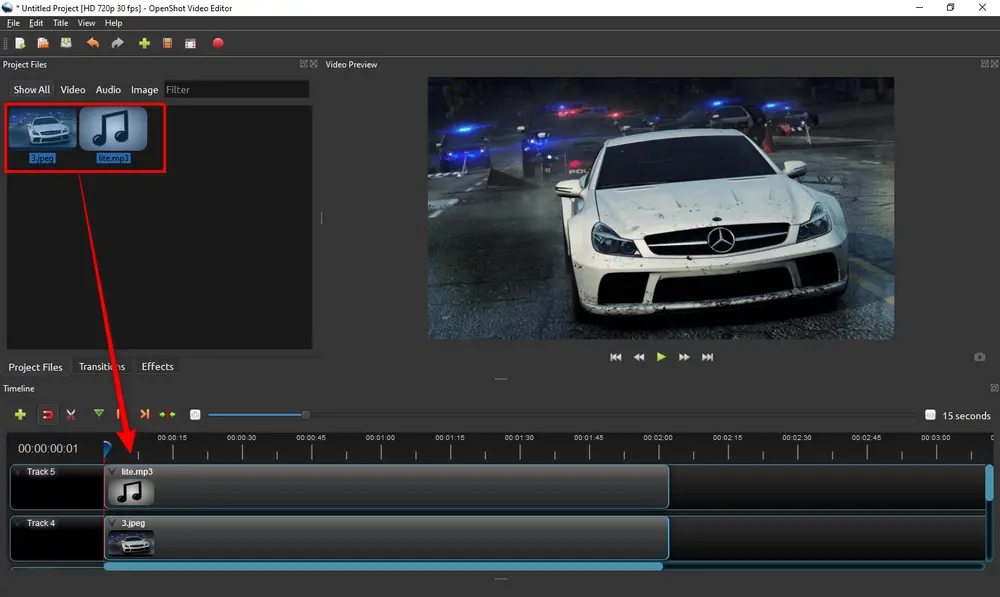
Step 3. Next, you can do further editing work, such as adding effects and transitions to image, trimming the audio, adding text, logos, etc., or proceed to turn MP3 into video with picture.
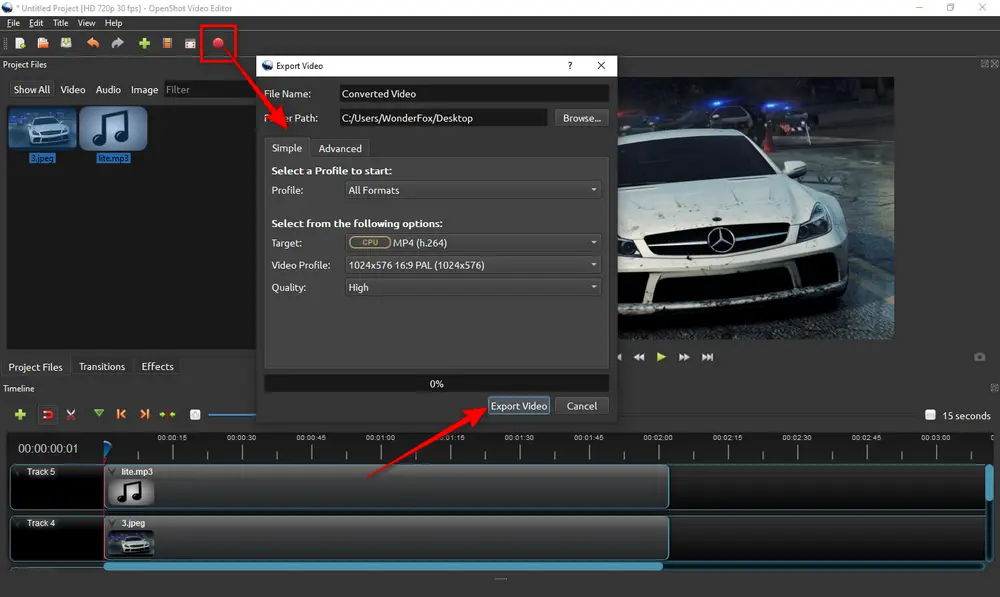
Step 4. Click the "Export Video" button (red circle) to open a dialog box where you can change video name, choose a destination folder, customize video resolution, format, quality and other preferences. Lastly, hit "Export Video" button to convert the audio to MP4 with image. If you need AVI instead, export MP4 first and then convert the MP4 video to AVI with a video converter, which is more reliable than trying to turn a bare MP3 file into AVI directly.
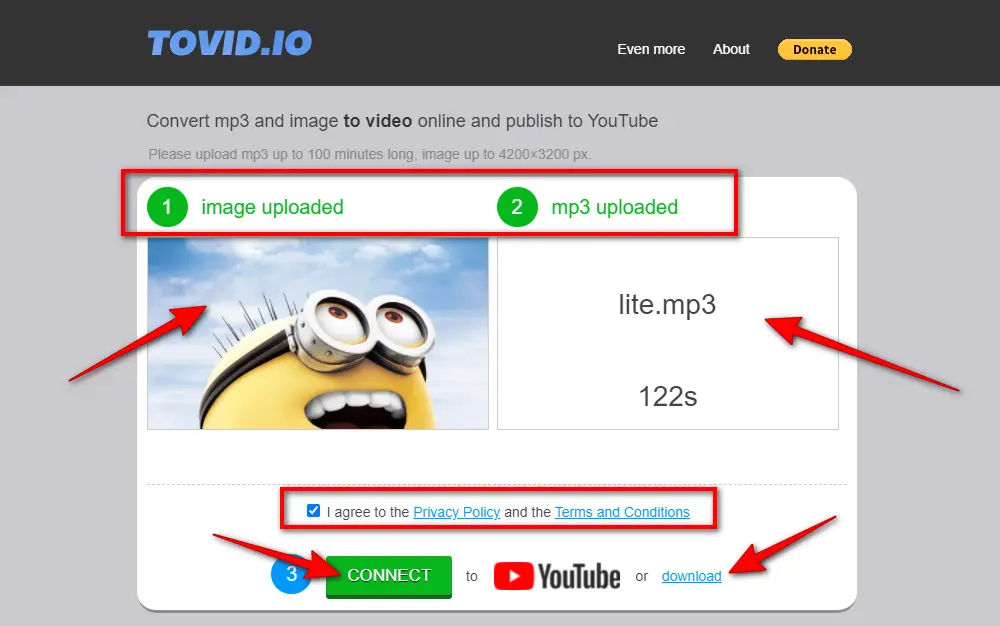
Apart from the offline applications, if you don't ask for much, some online audio to video converters also provide a handy and foolproof method to convert MP3, M4A, or AAC to video online. Some websites even allow you to upload audio to YouTube, Facebook, etc. directly after connecting your account.
You only need to upload your audio and image file separately, then start to merge them into one video file. Once the video processing is complete, just download the video to local drive. If the online tool only exports MP4 but you need AVI, download the MP4 first and convert it to AVI afterward. I've listed some validated online video converters for your reference.
1. https://tovid.io/
2. https://mp3toolbox.net/mp3_to_video
3. https://www.onlineconverter.com/audio-to-video
4. https://www.fileconverto.com/mp3-to-mp4-converter/
5. https://convert2video.com/Audio-to-Video/
Reminder: Online tools are convenient for small files, but they usually depend on file size limits, upload speed, queue time, and privacy policies. For private recordings, large podcasts, or batch jobs, an offline editor is safer and steadier.
Technically, some tools can put audio into an MP4 container. But if the target is a video-sharing site, you should add at least one image. Otherwise, the file may have no visible video track and may not solve the upload problem.
Yes. Import the M4A or AAC file into a video editor, add an image, stretch the image duration to match the audio, and export as MP4. If the editor cannot import the audio, convert it to MP3 first.
Check the audio duration first, then set the image duration to the same length. In a timeline editor, you can usually drag the edge of the image clip until it reaches the end of the audio track.
For common uploads, a 16:9 image such as 1280×720 or 1920×1080 works well. If the image ratio does not match the video ratio, the editor may add black bars or crop the picture.
A video file contains both audio and video data. Even a still image is encoded as a video stream, so the final MP4 or AVI will usually be larger than the original MP3, M4A, or AAC file.
You can pick any method to convert MP3, M4A, or AAC to video with image based on your actual need. For most users, MP4 is the best output format. If you really need AVI, create an MP4 video first and then convert it to AVI. See, without complicated steps and paid programs, free approaches are fully adequate for the job. Hope this post is more helpful to you. If there is anything unclear, feel free to drop me a line with detailed description. Cheers!

Kevincy joined the WonderFox team in 2014 and has been a senior columnist ever since. With over two decades of experience in the video editing industry, he shares tutorials, tips, and how-to guides on video/audio processing and personal DVD backups. Family-oriented and passionate about helping others, he is dedicated to making video and audio processing easier for readers.


Kevincy joined the WonderFox team in 2014 and has been a senior columnist ever since. With over two decades of experience in the video editing industry, he shares tutorials, tips, and how-to guides on video/audio processing and personal DVD backups. Family-oriented and passionate about helping others, he is dedicated to making video and audio processing easier for readers.
WonderFox HD Video Converter Factory Pro
1. Fix any unsupported format issue with 500+ presets.
2. Compress large files with imperceptible quality loss.
3. Save HD/FHD/2K/4K/8K videos from 1000+ sites.
4. Trim, merge, crop, rotate, flip, watermark video.
5. Record live streams, gameplay, webinar, video call.
6. Make animated GIFs from video or image sequence.
7. Ringtone Studio, Subtitle Extractor, and MORE...

Privacy Policy | Copyright © 2009-2026 WonderFox Soft, Inc. All Rights Reserved
