


DVDs can store more than movies. Concert DVDs, opera DVDs, music video collections, fitness DVDs, language-learning DVDs, and even old family discs may contain audio you want to keep on your computer or phone. Ripping the audio lets you make a personal backup, build a playlist, save a favorite song or dialog clip, or preserve a soundtrack before the disc gets scratched.
However, not every “DVD audio” task is the same. A regular DVD-Video disc usually stores the movie or concert in a VIDEO_TS folder, while a real DVD-Audio disc may store high-resolution audio in an AUDIO_TS folder. They need different tools. Also, choosing the right output format matters: AAC/M4A is good for mobile use, FLAC/WAV is better for archiving or editing, and AC3/DTS is useful when you want to keep surround sound.
Next, I'll show you how to rip audio from DVD using different methods, tools, and techniques, all in one go. I'll keep it simple and walk you through step by step, avoiding that tech jargon wherever possible. Let's get started!
This guide is written for making personal backups of DVDs you own. DVD ripping laws vary by country and region, especially when copy protection is involved. Please check whether it is legal to rip DVDs in your area before you start.
WonderFox DVD Ripper Pro is the easiest method for most DVD-Video discs, including movie DVDs, concert DVDs, music video DVDs, homemade DVDs, ISO images, and VIDEO_TS folders. It can directly extract DVD audio to common formats such as MP3, WAV, FLAC, AAC, M4A, OGG, WMA, AC3, and DTS. It also lets you choose audio tracks, adjust audio settings, and trim the part you need before conversion.
Use this method if you want a straightforward DVD-to-audio workflow on Windows, especially when VLC or other free tools fail to read the disc correctly.
 Download for Free
Download for Free
Download for Free
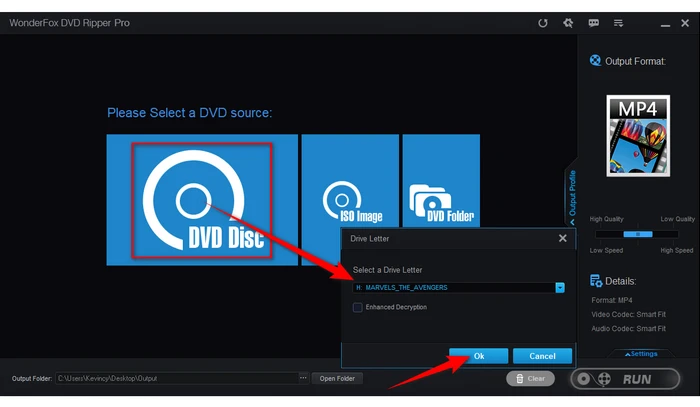
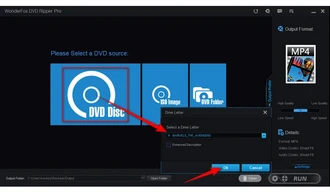
Before you get rolling, insert your DVD into the DVD drive first. If your computer does not have a built-in drive, connect an external DVD drive.
💡 You can also load an ISO Image or DVD Folder (VIDEO_TS) if your DVD has already been copied to the computer. The program will analyze the DVD, remove any copy protection, and auto-check the main title. You can manually select other titles if you want bonus clips or separate music videos.
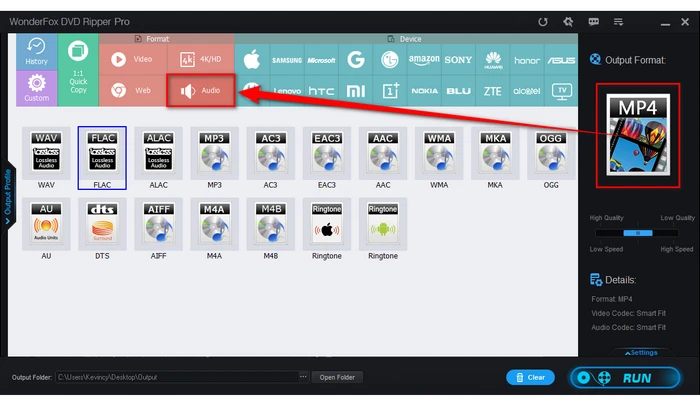
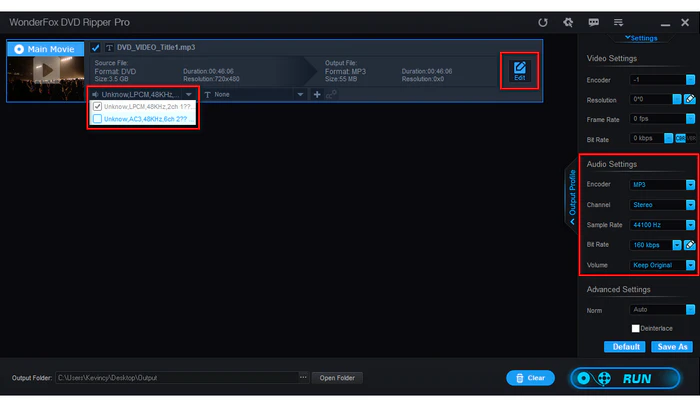
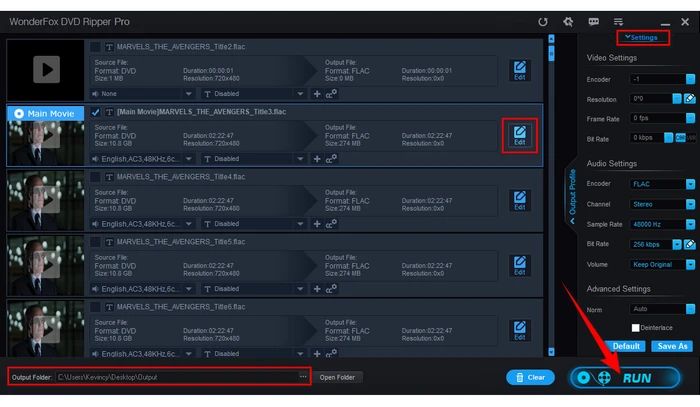
If the DVD includes multiple language tracks, commentary tracks, or 2.0/5.1 tracks, check the audio track information in the title list and choose the one you need. This is especially important when you want to rip only the music track, a language track, or a 5.1 surround track.
You can also open the "Settings" panel to adjust bitrate, sample rate, channel, and volume. If you only need a song, a speech, a dialog, or one scene from the DVD, click "Edit" and use the trim function to cut the wanted part before ripping.
The conversion time depends on the DVD size, selected format, drive speed, and your computer performance.
The steps above are the same no matter which audio format you choose. The difference is only the output profile and, sometimes, the settings you may want to adjust.
For quality-sensitive work, avoid converting a lossy DVD track to another lossy format repeatedly. If you need to edit first and convert later, rip to FLAC or WAV, finish the editing, and then export a smaller MP3/AAC copy for sharing or mobile playback.
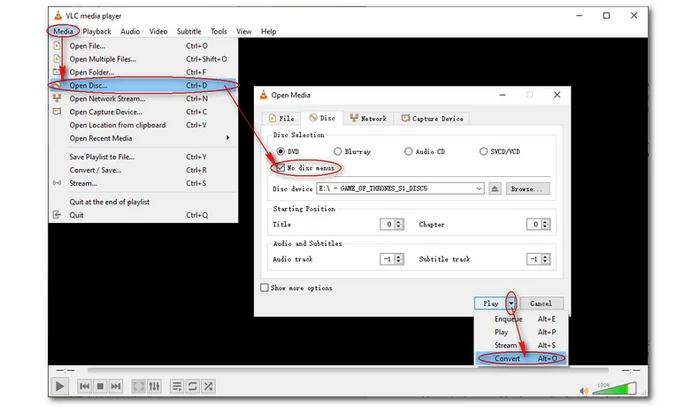
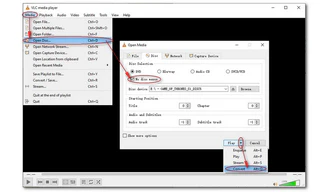
VLC Media Player can also convert a DVD title to an audio file. It is free and works on Windows, macOS, and Linux, so it is worth trying when you only need to rip audio from a homemade or unprotected DVD.
However, VLC is not a dedicated DVD decryption tool. If the DVD is protected, damaged, badly mastered, or has complicated menus, VLC may output a silent, choppy, incomplete, or unplayable audio file.
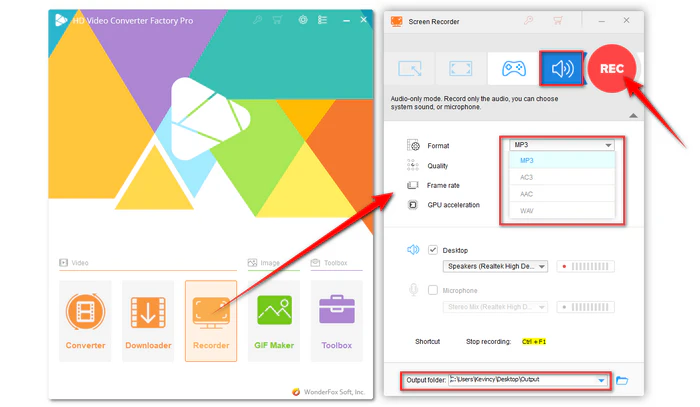
If you only need a short clip, or a disc cannot be ripped properly but plays fine on your computer, recording the system audio can be a practical fallback. This method is real-time and may not keep the original quality, so it is not the first choice for full albums or high-quality archives. But it can work for a short line, a song section, or background music that you need to save quickly.
You can use the audio-only recording mode in WonderFox HD Video Converter Factory Pro to capture the sound played from your DVD player software.
DVD Audio Extractor is another option when you want a dedicated audio extraction workflow. It supports both DVD-Video and DVD-Audio, and can export audio to formats such as MP3, WAV, FLAC, and OGG. It is especially useful if your disc is a real DVD-Audio disc and contains high-resolution audio in the AUDIO_TS folder.
The general workflow is simple: select the DVD source, choose the titles/chapters or audio groups, pick an output format, choose an output folder, and start extraction.
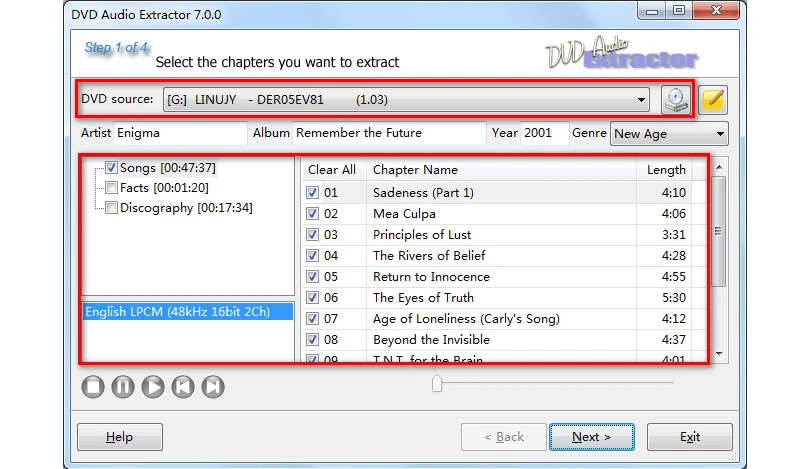
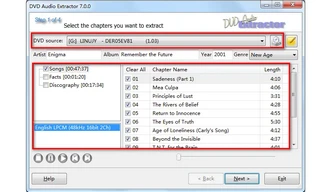
For DVD-Audio discs, this method is usually easier than forcing a DVD-Video ripper to read the disc. For regular movie/concert DVDs, Method 1 is still simpler for most Windows users.
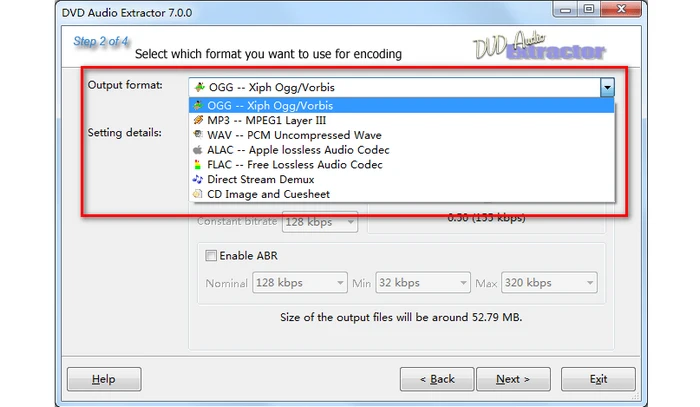
The tools below are still useful in certain cases, but they are not always as beginner-friendly as a dedicated DVD audio ripper.
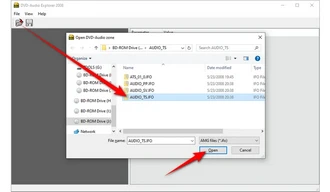
DVD-Audio Explorer is a small, old, but still useful utility for DVD-Audio discs. It can open the AUDIO_TS.IFO file and extract selected audio tracks. It is mainly for advanced users who understand DVD-Audio structures.
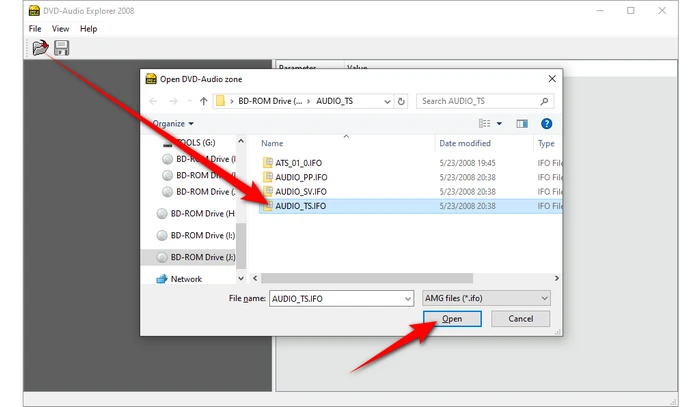
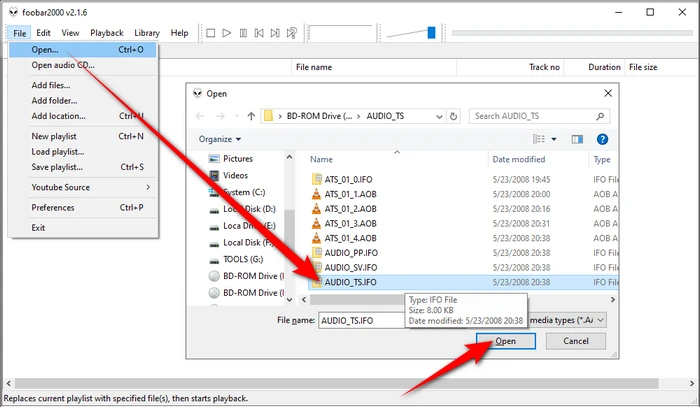
Foobar2000 can be used for DVD-Audio playback and conversion after installing the required DVD-Audio component. It is flexible, but setup takes more work than common DVD ripping software.
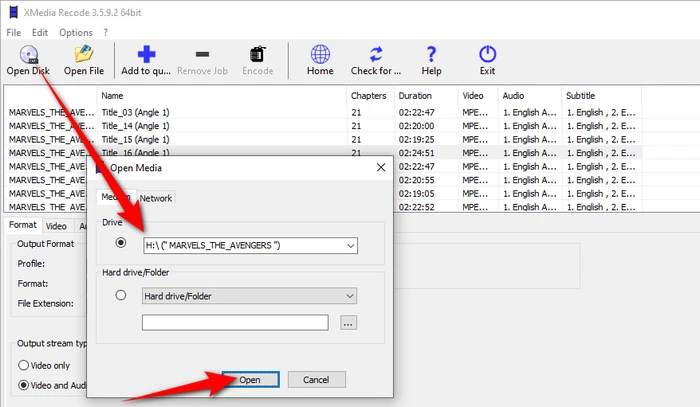
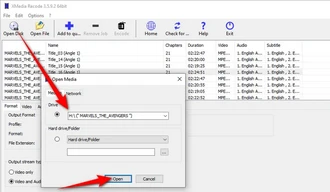
XMedia Recode is a versatile and user-friendly audio and video conversion software. It can be used to convert, edit, and extract audio and video files, making it a great choice for users who need to rip audio from DVDs or even Blu-rays (without copy protection). It's popular because of its wide-ranging support for file formats, the flexibility of settings, and an intuitive interface.
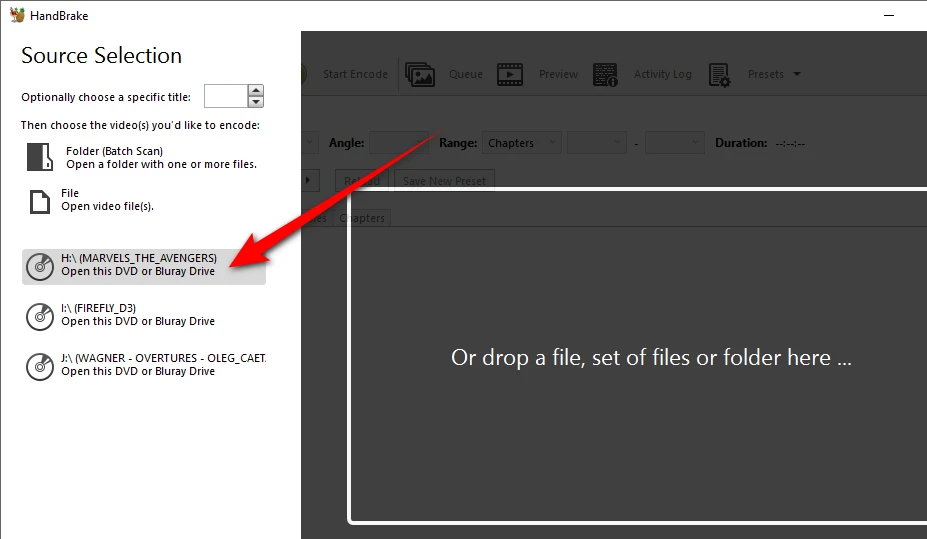
HandBrake is a free, open-source tool primarily designed to convert video files. It's also widely used for converting DVDs and Blu-ray discs that do not contain any kind of copy protection into MP4, MKV, or WebM formats. HandBrake supports a wide range of presets and is cross-platform, running on Windows, macOS, and Linux.
As HandBrake doesn't support audio export, a video-to-audio converter tool is essential after using HandBrake, enabling you to convert extracted DVD video into the desired audio format. Popular choices are Audacity (with FFmpeg library installed), VLC Media Player, or fre:ac. These tools are also free and open-source, with a user-friendly interface.
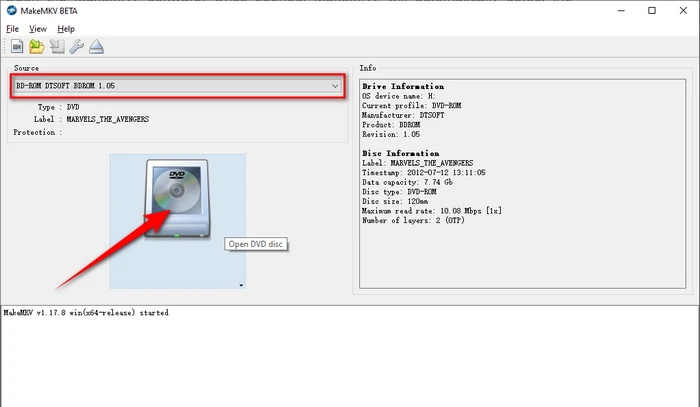
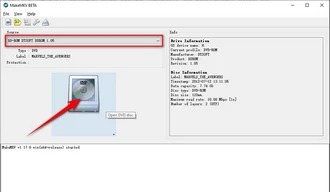
MakeMKV is a powerful and versatile software designed to rip DVDs and Blu-ray discs into MKV (Matroska Video) format. This software is highly popular due to its simplicity and efficiency in extracting entire movies, including all the associated audio and subtitle tracks, without compromising quality. MakeMKV can handle copy-protected discs and bypass encryption using its own decryption techniques.
However, it's important to note that MakeMKV does not export audio-only files directly. To extract the audio from these MKV files, you will need an additional conversion step.
Many people say “DVD audio” when they simply mean the soundtrack inside a movie or concert DVD. Technically, that is usually DVD-Video. A true DVD-Audio disc is a different format designed mainly for high-resolution music playback.
If your disc is a normal movie/concert DVD, start with Method 1. If your disc is labeled DVD-Audio or you can see an AUDIO_TS.IFO file, try Method 4 or the DVD-A-specific tools instead.
A: Yes, but only if the DVD has a real 5.1 audio track. Choose the 5.1 audio track and export it as AC3 or DTS, or choose a format/settings that preserve multi-channel audio. If the DVD only has stereo audio, converting it to AC3/DTS will not create true surround sound.
A: FLAC and WAV are better for preserving the source audio without extra lossy compression, but they create larger files. MP3 and AAC are smaller and easier to play everywhere. For archiving or editing, choose FLAC/WAV. For daily listening, choose MP3 or AAC/M4A.
A: No. VLC can work with many homemade or unprotected DVDs, but it may fail on protected DVDs, discs with complex menus, damaged discs, or DVD-Audio discs. If VLC outputs no sound or a broken file, use a dedicated DVD audio ripper or a DVD-Audio tool.
A: WAV, FLAC, and multi-channel AC3/DTS files can be large. If you only need listening copies, convert the DVD audio to MP3, AAC, M4A, or OGG and lower the bitrate reasonably.
A: Many DVDs contain multiple audio tracks. Before ripping, check the audio track list and select the correct language, stereo/5.1 version, or commentary track. This is one reason a dedicated DVD ripper is easier than VLC for DVD audio extraction.
A: WonderFox DVD Ripper Pro is designed for DVD-Video discs, ISO images, and VIDEO_TS folders. If you have a true DVD-Audio disc with AUDIO_TS content, use DVD Audio Extractor, DVD-Audio Explorer, or Foobar2000 with the proper component.
For most users, the simplest way to rip audio from DVD is to load the disc in WonderFox DVD Ripper Pro, choose the right audio format, select the needed audio track, and click RUN. It covers common DVD-to-audio needs such as MP3, AAC, M4A, FLAC, WAV, OGG, WMA, AC3, and DTS in one workflow.
VLC is a useful free option for unprotected discs, recording is a fallback for short clips, and DVD Audio Extractor or DVD-A-specific tools are better for real DVD-Audio discs. Choose the method based on your disc type and what you want to do with the final audio file.

Kevincy joined the WonderFox team in 2014 and has been a senior columnist ever since. With over two decades of experience in the video editing industry, he shares tutorials, tips, and how-to guides on video/audio processing and personal DVD backups. Family-oriented and passionate about helping others, he is dedicated to making video and audio processing easier for readers.


Kevincy joined the WonderFox team in 2014 and has been a senior columnist ever since. With over two decades of experience in the video editing industry, he shares tutorials, tips, and how-to guides on video/audio processing and personal DVD backups. Family-oriented and passionate about helping others, he is dedicated to making video and audio processing easier for readers.
 Download for Free
Download for Free
Download for Free

Terms and Conditions | Privacy Policy | License Agreement | Copyright © 2009-2026 WonderFox Soft, Inc. All Rights Reserved