Free Download
Efficient Converter to Solve PowerPoint Codec Unavailable Errors
AuthorRecommended by the author

SoftwareHow to & Tips

Video FormatsConvert Video

Resources

How to Fix Codec Unavailable and Media Unavailable in PowerPoint?

Author: Kevincy by Kevincy

Updated on Aug 18, 2026

PowerPoint may show “Codec Unavailable,” “Media Unavailable,” or, in some older Office setups, “QuickTime Not Available” when it cannot decode or properly access an inserted video or audio file. This guide starts with PowerPoint’s built-in fixes, then covers the most reliable format and codec solution.

👉 A dependable fix: convert the file to a PowerPoint-friendly format with this universal media converter:

Codec Unavailable in PowerPoint?

You insert a video or audio file into a presentation, but PowerPoint refuses to play it and reports “Codec Unavailable” or “Media Unavailable.” In older PowerPoint installations, you may also see a “QuickTime Not Available” message. These errors do not always mean the file extension itself is unsupported. A file can use a familiar container such as MP4 or MOV while its actual video or audio codec is something PowerPoint cannot decode. Broken links, media inserted by an older PowerPoint version, or a damaged file can cause similar symptoms. The fixes below cover these common cases in a practical order.

What does “codec unavailable” mean in PowerPoint?

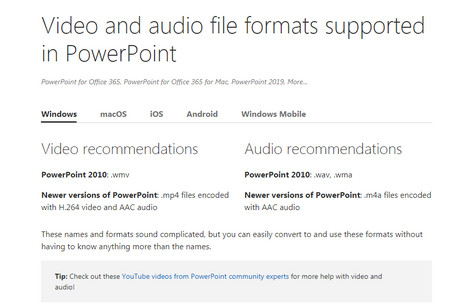
A codec is the technology used to encode and decode video or audio data. The file extension tells you the container, but the media inside can use different codecs. When PowerPoint cannot decode that media, it may show a codec-related error or simply fail to insert or play the file. Microsoft currently recommends MP4 video encoded with H.264 video and AAC audio, and M4A audio encoded with AAC for the most predictable compatibility on Windows.

6 Practical Fixes for Codec or Media Unavailable in PowerPoint

Optimize Media Compatibility in PowerPointFile > Info > Optimize Compatibility

1. Optimize Media Compatibility

Open the presentation and go to File > Info. If PowerPoint detects media that may have trouble on another device, an Optimize Compatibility option appears. Run it and let PowerPoint process the media. In newer versions, you can also use File > Info > Check for Issues > Check Compatibility.

If the presentation contains linked videos, PowerPoint may ask you to embed them. This is worth doing before you move the presentation to another computer. Note that Optimize Compatibility can remove embedded subtitles and alternate audio tracks, so keep a backup if those are important.

Recommended Video Format for PowerPointUse a modern PowerPoint-friendly media format

2. Convert the Media to a Recommended Format

For current PowerPoint on Windows, Microsoft recommends MP4 with H.264 video and AAC audio. For audio-only files, M4A with AAC is the recommended choice. Current PowerPoint also lists formats such as MOV and WebM as supported, but the codec inside the file still matters.

This is especially important with media created by phones, cameras, screen recorders, editing programs, or older QuickTime-based workflows. A familiar extension does not guarantee that PowerPoint can decode the streams inside.

Microsoft has also limited and deprecated support for several older formats, including WMV/WMA, MPEG-2, AVI, AIFF, and 3GPP, in PowerPoint version 2505 and later. Some such files may be converted to MPEG-4 automatically when inserted or played. For a presentation you want to reuse across newer PCs, converting the source media yourself to H.264/AAC MP4 is usually more predictable.

See #part 2 for a detailed conversion tutorial.

3. Reinsert, Embed, or Upgrade Older Media

If the media was linked instead of embedded, PowerPoint may lose access after the presentation or media file is moved. Put the media in a stable local folder, reinsert it, or use PowerPoint’s link-management options to embed it when available.

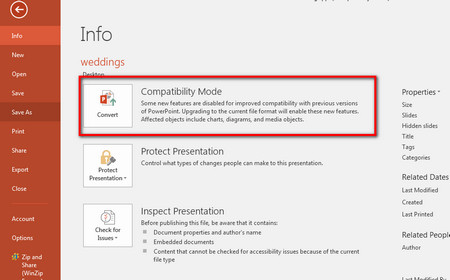
Media inserted with an older PowerPoint version can also require an upgrade before it plays correctly in a newer version. Microsoft recommends using the options under File > Info to upgrade or convert older presentation media rather than trying to repair the file by changing extensions.

Convert an Older PowerPoint File to PPTXConvert an older presentation instead of renaming it

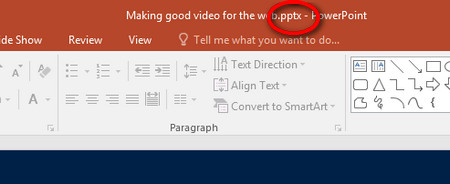
4. Convert an Old .ppt Presentation to .pptx Properly

If the presentation itself was created in an older PowerPoint format, open it in PowerPoint and use File > Info > Convert when that option is available, or use Save As and save a new .pptx copy.

Do not simply rename .ppt to .pptx; renaming does not convert the internal file structure or embedded media.

Use a Trusted Codec or Media ExtensionUse a Trusted Codec or Media Extension

5. Use a Trusted Codec or Media Extension Only When Needed

If the file should be compatible but Windows cannot decode its codec, installing the appropriate codec or media extension can help. PowerPoint can support additional media types when the required codec is available on the PC. However, avoid old or unknown codec packs. Prefer a trusted codec supplied by Microsoft, the hardware/software vendor, or simply convert the file to a PowerPoint-friendly format so the presentation is less dependent on one computer’s codec setup.

6. Reinsert the File and Check PowerPoint Itself

If only one media item fails, remove it from the slide, verify that the original file plays normally in Windows, and insert it again from a local folder. If multiple presentations suddenly have the same problem, restart Windows, update Microsoft 365 or Office, and test again. Clearing unnecessary TEMP files may help with freezing or cache-related behavior, but it is not a direct fix for an unsupported codec.

Also make sure the media file is not damaged. If it does not play correctly outside PowerPoint either, repair or recreate the media before troubleshooting the presentation.

The Most Reliable Fix: Convert Unsupported Media for PowerPoint

If PowerPoint’s compatibility tools do not solve the problem, the media itself is usually the next thing to fix. WonderFox HD Video Converter Factory Pro can convert common and less common video/audio files to PowerPoint-friendly output without requiring you to hunt for a missing codec. For current PowerPoint on Windows, use H.264/AAC MP4 for video whenever possible.

Get the converter and follow the steps below.

Free Download Free Download

(How-to) Convert Video & Audio to PowerPoint-Friendly Formats

Add the problem video or audio file

Step 1. Add the problem video or audio file

DownloadDownload and install HD Video Converter Factory Pro on your Windows PC.

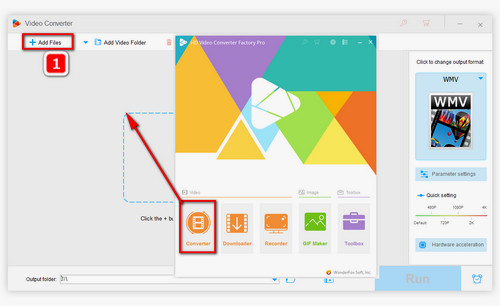
Launch it and open “Converter,” then import the media that PowerPoint cannot play by clicking “Add Files” or dragging and dropping it into the window.

Choose a PowerPoint-friendly Output Format

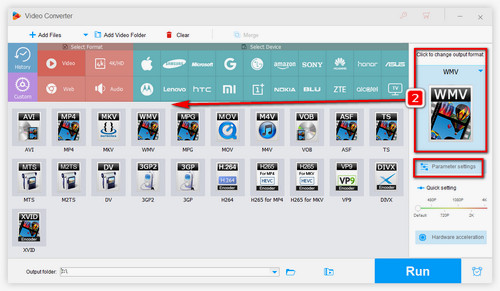
Step 2. Choose a PowerPoint-friendly format

Open the output format menu on the right. For video, go to “Video” and choose “MP4.” The default MP4 profile uses H.264 video and AAC audio, which matches Microsoft’s current recommendation for PowerPoint on Windows.

For an audio-only file, choose an AAC-based output such as M4A. If necessary, open “Parameter settings” to check or change the video and audio codecs.

Click Run to Start the Conversion

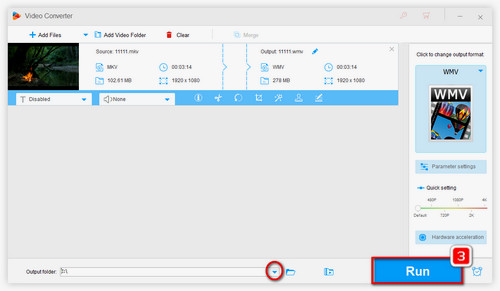
Step 3. Start the conversion

Keep the default output folder or choose another location with the bottom ▼ button. Then press “Run” to start the conversion.

When the process is complete, remove the old problem media from the slide and insert the converted file. Test the presentation on the computer you plan to use for presenting, especially if the file will be moved to another PC.

The workflow also works when PowerPoint reports an unavailable audio codec.

FAQs

Q1. Why does PowerPoint say “QuickTime Not Available”?

This message is mainly associated with older PowerPoint/Office setups that relied on QuickTime for certain media. Apple no longer supports QuickTime 7 for Windows, so installing it on a modern PC is not a good long-term fix. If you inherit an old presentation that shows this error, upgrade the presentation if possible and convert the problem media to H.264/AAC MP4.


Q2. Does PowerPoint support MOV files now?

Current Microsoft documentation lists QuickTime/MOV as a supported video format. However, MOV is a container, so playback can still fail when the video or audio codec inside is not available on the PC. Converting the file to H.264/AAC MP4 is often the safer choice for sharing a presentation across Windows computers.


Q3. Can I fix the problem by changing the file extension?

No. Renaming a video from one extension to another does not change its codec. The same is true for renaming an old .ppt file to .pptx. Use a media converter for video/audio, and use PowerPoint’s Convert or Save As feature for presentations.


Q4. Should I install a codec pack for PowerPoint?

A missing codec can cause playback problems, and installing the correct trusted codec may help. But a random codec pack can add unnecessary components and makes the presentation dependent on that PC. For presentations that must work elsewhere, converting the media to PowerPoint’s recommended format is usually simpler and more portable.

Sum Up

When PowerPoint reports Codec Unavailable or Media Unavailable, start with its built-in compatibility tools and check whether the media is linked, outdated, or damaged. If the problem is codec-related, converting the media to H.264/AAC MP4 for video or AAC-based M4A for audio is the most portable solution for current Windows versions of PowerPoint. Older QuickTime-related errors should be treated as a legacy compatibility issue rather than a reason to install unsupported QuickTime software.


Kevincy

Kevincy Berel

Kevincy joined the WonderFox team in 2014 and has been a senior columnist ever since. With over two decades of experience in the video editing industry, he shares tutorials, tips, and how-to guides on video/audio processing and personal DVD backups. Family-oriented and passionate about helping others, he is dedicated to making video and audio processing easier for readers.

Email

How to Insert a DVD Video into PowerPoint?

WonderFox DVD Ripping Software

WonderFox DVD Ripper Pro

PowerPoint cannot directly embed a DVD-Video disc. WonderFox DVD Ripper Pro can extract the needed video or audio from a DVD and convert it to a PowerPoint-friendly digital file such as H.264/AAC MP4. It can also back up a DVD to ISO or VIDEO_TS when you need a separate disc copy.

Free download WonderFox DVD Ripper Pro Free download WonderFox DVD Ripper Pro

More Related Articles

Two Simple Ways to Convert PowerPoint to Video Compress Video in PowerPoint with Ease and Efficiency How to Upload PowerPoint to YouTube (with or without audio)
The Best Way to Embed DVD into PowerPoint 3 Solutions Provided - How to Play PowerPoint Presentation on TV? How to Put a YouTube Video in PowerPoint? (2026)