
WonderFox HD Video Converter Factory Pro
Flexible Screen Recorder for Windows
√ Record video and audio together or separately
√ Multiple recording modes for your choice
√ Options to preset recording format/quality/fps
√ Record game videos at up to 4K/60fps
√ One-stop tools to edit, convert, and compress recordings


Snipping Tool is one of the quickest ways to make a short screen recording on Windows 11. It is built into the system, opens with a keyboard shortcut, and can capture a selected area together with system sound and microphone input on current versions. However, the app can occasionally disappear from Start, fail to open, lose audio, show no Record button, or refuse to save a clip.
This guide explains both sides: how to use the recorder correctly and how to recover or repair Snipping Tool when it is missing or not working. It also points out the app’s practical limits so you can decide when a more capable recorder makes sense.
Snipping Tool started as a screenshot utility, but the Windows 11 version now includes a video recorder. You can launch it from the Start menu or press Windows + Shift + R to open the video capture overlay directly.
For screen recording, Snipping Tool can:
Important: Video recording is a Windows 11 feature. Snipping Tool on Windows 10 can capture screenshots, but it does not provide the same built-in video recorder.
The original screen recorder first appeared in Snipping Tool version 11.2211.35.0. That old version number is no longer a useful target because Microsoft has continued updating the app. If the Record button or audio controls are missing, update Snipping Tool from the Microsoft Store instead of trying to install that specific release.
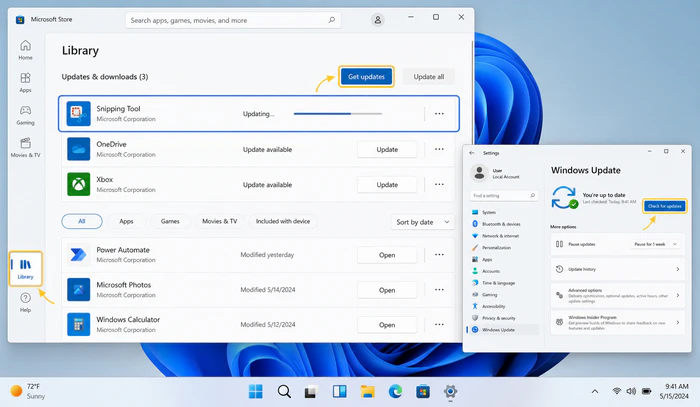
Before you begin, update Windows 11 and open Microsoft Store > Library > Get updates to install the latest Snipping Tool release. Also close private notifications, passwords, and other information you do not want to appear in the recording.
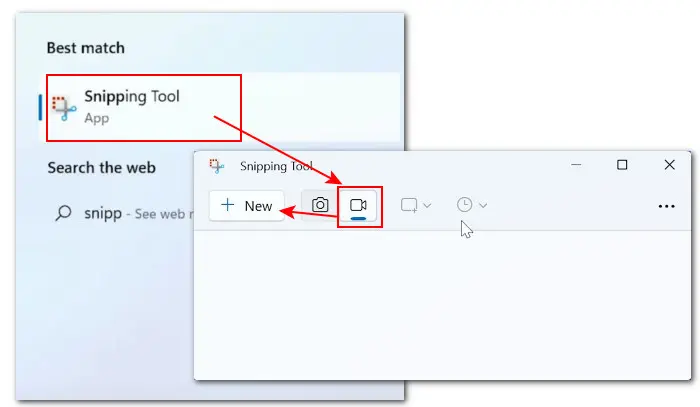
Step 1. Open the video recorder. Search for Snipping Tool from the Start menu, launch it, and select the video camera or Record button. Then click New. For a faster start, press Windows + Shift + R.
Step 2. Select the recording area. Drag the crosshair around the part of the screen you want to capture. To imitate a full-screen recording, draw the selection from one corner of the display to the opposite corner.
Step 3. Set the audio. Use the speaker/system-audio and microphone controls on the recording toolbar to choose what the clip should contain. If you are recording narration, confirm that the correct microphone is selected in Settings > System > Sound > Input.
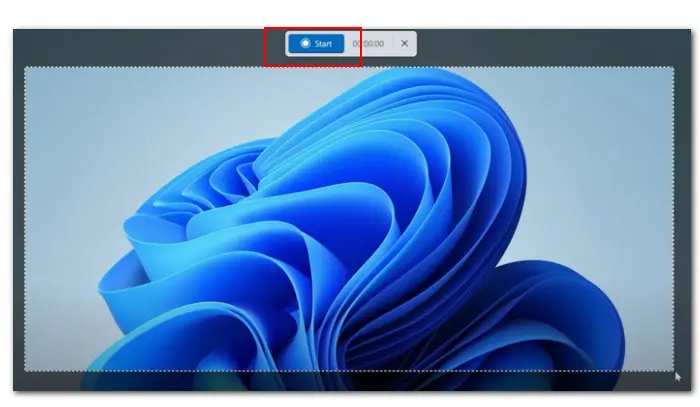
Step 4. Start recording. Click Start. A short countdown gives you time to return to the app, browser tab, presentation, or tutorial you plan to capture.
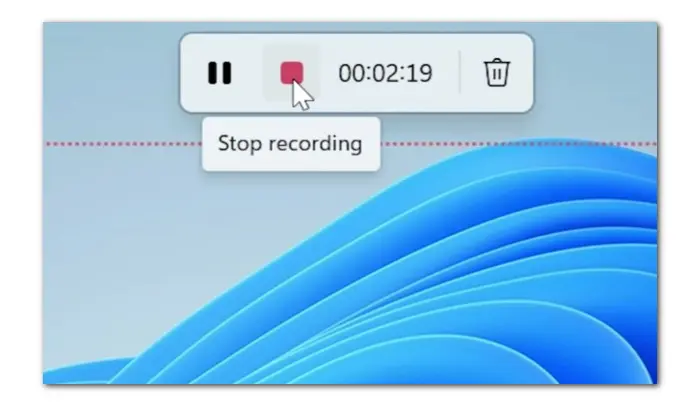
Step 5. Pause or stop. Use Pause when you need a temporary break. Click the red Stop button when the recording is complete.
Step 6. Review and save the MP4. Play the preview to check the picture and sound. Current Windows 11 versions can automatically save screen recordings as MP4 files in Videos > Screen Recordings. Use Save as if you want another name or folder. You can also choose Edit in Clipchamp when you need to remove unwanted sections, add captions, adjust audio, or combine the clip with other media.
Tip: Make a short test recording before a long meeting, class, or tutorial. A ten-second test can reveal a muted microphone, wrong audio device, cropped capture area, or insufficient disk space before it matters.
The right fix depends on whether the whole app is missing, only the Record button is gone, or recording itself is failing. Start with the symptom that matches your PC and leave system-level repairs until last.
1. Restart Windows and search for Snipping Tool again.
If Snipping Tool vanished after an update or no longer opens from a shortcut, restart the computer first. Then open Start and search for Snipping Tool. If the app appears, open it directly to separate an app problem from a shortcut or Start-menu problem. You can also open Task Manager with Ctrl + Shift + Esc and end a stuck Snipping Tool process before relaunching it.
2. Update Snipping Tool and Windows 11.
Open Microsoft Store, go to Library, and install available app updates. Then check Settings > Windows Update. Updating both components is especially important when the Record button or audio controls are missing, the preview is blank, or the app started crashing after a Windows update.
3. Repair or reset the app if it is installed but broken.
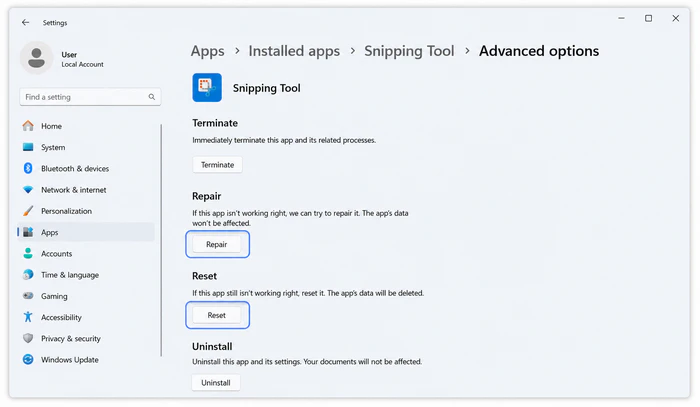
Go to Settings > Apps > Installed apps > Snipping Tool > Advanced options. Select Repair first. If Repair does not help, select Reset and reopen the app. Reset can clear the app’s local settings, so save any unsaved captures beforehand.
4. Reinstall Snipping Tool if the app is completely missing.
If Snipping Tool does not appear in Start or under Installed apps, open Microsoft Store, search for Snipping Tool, and install it again. If it is listed but remains unusable after Repair and Reset, uninstall it from Settings > Apps > Installed apps, restart Windows, and reinstall the current Store version. This is preferable to copying an old SnippingTool.exe from a Windows.old folder.
5. If the problem began after a Windows update, use Windows Update repair.
On supported Windows 11 systems, open Settings > System > Recovery. Under Fix problems using Windows Update, choose Reinstall now if the option is available. Windows reinstalls the current version while preserving your apps, files, and settings. Use this only when normal app updates, Repair/Reset, and reinstalling Snipping Tool have not fixed a broader Windows problem.
6. If the app opens but the Record button is missing, check Windows edition, media components, and policy.
Screen recording in Snipping Tool is a Windows 11 feature. Press Windows + Shift + R for video capture; Windows + Shift + S is for screenshots. If you use Windows 11 N, install the Media Feature Pack from Settings > Apps > Optional features > View features, then restart Windows. Without the media pack, Snipping Tool screen recording is unavailable.
On managed work or school PCs, an administrator can also disable Snipping Tool screen recording through policy. If the app is fully updated but Record is still unavailable on an organization-managed device, contact IT instead of changing registry or Group Policy settings yourself.
7. Fix missing or silent audio.
Make sure the speaker/system-audio and microphone buttons are enabled before recording. Then open Settings > Privacy & security > Microphone and allow microphone access for apps. Check the active input device under Settings > System > Sound, disconnect unused Bluetooth headsets, and make another short test.
Some protected streaming videos, secure windows, and apps using capture protection may record as a black screen or without sound. Snipping Tool settings cannot bypass those source restrictions.
8. Check saving, storage, display, and graphics problems.
If a recording finishes but seems to disappear, check Videos > Screen Recordings first, because current Windows versions can save recordings there automatically. If saving still fails, use Save as and choose a local folder with enough free space. Avoid a disconnected network location or a paused cloud folder.
For black previews, flickering, crashes, or multi-monitor capture problems, install current display drivers through Windows Update or the PC/GPU manufacturer, then temporarily close other screen recorders, overlays, and remote-desktop tools that may compete for capture resources.
9. Repair Windows system files only if the problem is broader than Snipping Tool.
If several built-in apps are missing or failing, run these commands in Terminal or Command Prompt as administrator, one at a time:
DISM /Online /Cleanup-Image /RestoreHealth
sfc /scannow
Restart Windows after both finish. If you also see other signs of unwanted software or system tampering, run a Windows Security scan. These system-level steps are more appropriate than deleting a user profile just to restore one app.
Snipping Tool is convenient for a quick regional recording, but it is not designed for every job. It offers limited control over format, quality, frame rate, output size, and post-recording processing. It also lacks a dedicated webcam-overlay workflow and advanced tools for long gameplay, webinars, or repeated production work.
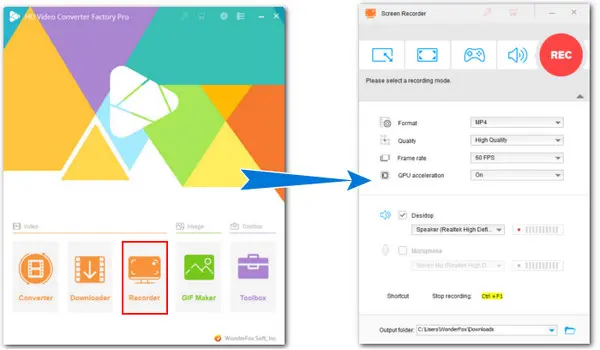
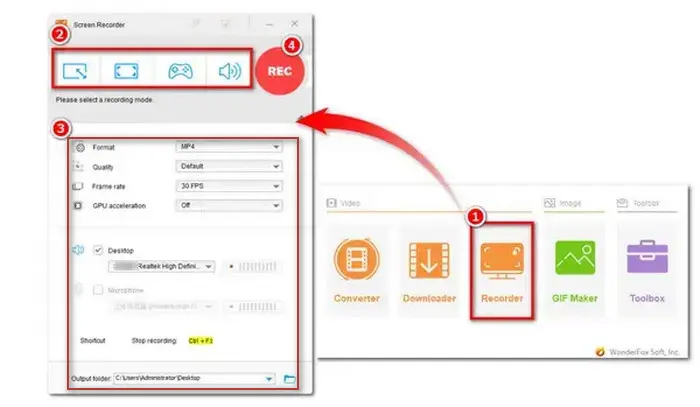
WonderFox HD Video Converter Factory Pro provides a more configurable recorder on Windows. It can capture a custom area, the full screen, gameplay, or audio only; record system sound and microphone input together or separately; and let you choose the output format, quality, frame rate, and folder. Afterward, the same program can trim, merge, compress, or convert the screen recording.
How to record with it:
Step 1. DownloadDownload and install the program on your Windows PC.
Step 2. Launch HD Video Converter Factory Pro and open Recorder.
Step 3. Choose Custom, Full Screen, Game, or Audio-only mode, depending on the task.
Step 4. Set the format, quality, frame rate (up to 60 fps), system sound, microphone, and output folder.
Step 5. Click REC to begin. Press Ctrl + F1 to stop the recording.
Disclaimer: Record only content you own or have permission to capture. Copyright rules, platform terms, workplace policies, and local privacy laws may apply. WonderFox does not encourage copyright infringement or unauthorized recording.
Q1. What is the shortcut for Snipping Tool screen recording?
Press Windows + Shift + R to open the video recording overlay. Windows + Shift + S is for screenshots.
Q2. Can Snipping Tool record system audio and a microphone?
Yes, current Windows 11 versions can record system audio and microphone input. If the audio buttons are missing, update both Snipping Tool and Windows 11. Also check microphone privacy permission and the selected input device.
Q3. Why is Snipping Tool missing, or why is there no Record button?
If the whole app is missing, reinstall Snipping Tool from Microsoft Store. If the app opens but Record is missing, make sure you are on Windows 11, update the app and Windows, and install the Media Feature Pack if you use Windows 11 N. A managed work or school PC may also have screen recording disabled by policy.
Q4. Why is Snipping Tool not saving my recording?
Check Videos > Screen Recordings first because current Windows 11 versions can save recordings there automatically. If the clip is not there, use Save as and choose a local folder with enough free space. Then repair the app if saving still fails.
Q5. Can Snipping Tool record the whole screen?
You can drag the rectangular selection around the full display. It works for a simple full-screen capture, although the app is still based on selecting a recording area and offers fewer capture controls than a dedicated recorder.
Q6. Can Snipping Tool record a webcam?
It does not provide a built-in webcam overlay for recording your face on top of the screen. Use Clipchamp, OBS Studio, Loom, Camtasia, or another recorder with webcam support for that workflow.
For a short Windows 11 screen clip, Snipping Tool is fast and usually sufficient. It records audio, has a direct Windows + Shift + R shortcut, can automatically save MP4 recordings, and can hand a finished video to Clipchamp for further editing. If the app disappears or stops working, start with Store/Windows updates, Repair or Reset, and a clean reinstall before moving to Windows-level recovery commands.
For longer recordings or work that needs selectable formats, quality controls, stable system-and-microphone capture, gameplay mode, and built-in conversion or compression, a dedicated recorder such as WonderFox HD Video Converter Factory Pro is the more practical option.

Kevincy joined the WonderFox team in 2014 and has been a senior columnist ever since. With over two decades of experience in the video editing industry, he shares tutorials, tips, and how-to guides on video/audio processing and personal DVD backups. Family-oriented and passionate about helping others, he is dedicated to making video and audio processing easier for readers.


Kevincy joined the WonderFox team in 2014 and has been a senior columnist ever since. With over two decades of experience in the video editing industry, he shares tutorials, tips, and how-to guides on video/audio processing and personal DVD backups. Family-oriented and passionate about helping others, he is dedicated to making video and audio processing easier for readers.

 Download for Free
Download for Free
Download for Free

Terms and Conditions | Privacy Policy | License Agreement | Copyright © 2009-2026 WonderFox Soft, Inc. All Rights Reserved